
You’ll notice some foods can boost blood flow by supporting nitric oxide production, reducing inflammation, and improving arterial flexibility. Nitrate-rich greens and beets, plus citrus and berries, help stabilize NO availability, while omega-3 fats and polyphenols curb vascular resistance. Garlic, turmeric, and ginger add anti-inflammatory benefits, and hydration with modest sodium and regular activity further enhance perfusion. Understanding these patterns may reveal how choosing certain foods aligns with your circulatory goals—and what to include next.
Key Points
- Nitrate-rich vegetables convert to nitric oxide, widening vessels and lowering resistance for better perfusion.
- Antioxidants stabilize and preserve nitric oxide, supporting endothelial function and vascular responsiveness.
- Omega-3 fatty acids reduce inflammation and improve vascular smooth muscle function, aiding blood flow.
- Polyphenols and flavonoids protect the endothelium and enhance nitric oxide availability and vessel relaxation.
- Spices, herbs, and moderate caffeine can provide vasodilatory or anti-inflammatory support, improving short-term and overall circulation.
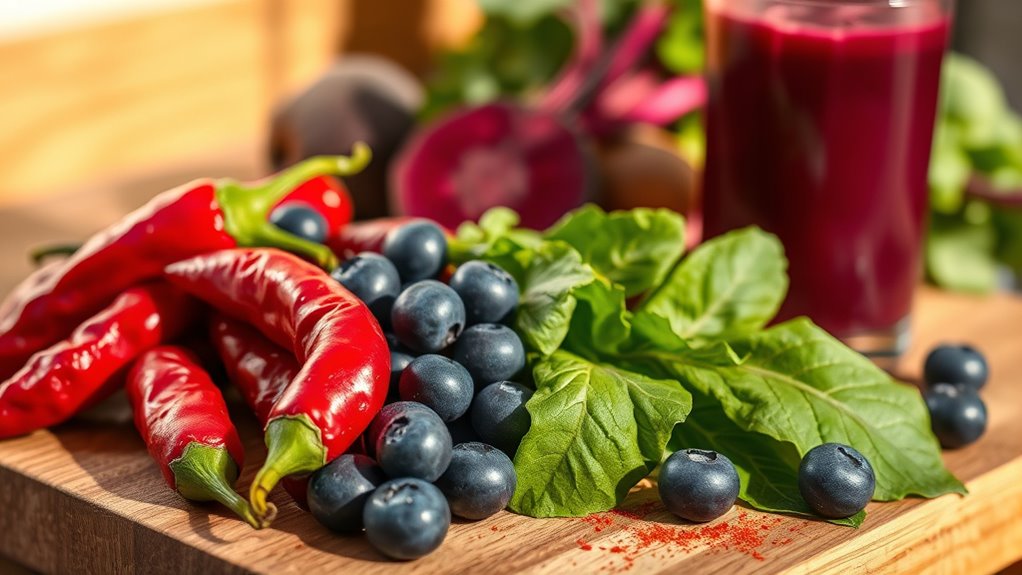
What foods can boost your blood flow, and how do they work? You’re looking for foods that support better circulation, and you’ll find that several nutrients play direct roles in vasodilation and blood viscosity. In practical terms, this means focusing on patterns you can maintain: ingredients with nitrite or nitrate precursors, antioxidants, healthy fats, and compounds that improve endothelial function. You’ll notice the mechanism in two core ways: increasing circulation and promoting vessel relaxation. When your endothelium releases nitric oxide, vessels widen, lowering resistance and potentially improving tissue perfusion. Antioxidants help preserve nitric oxide by limiting oxidative stress, while omega-3 fats support smooth muscle function in vessels.
Citrus fruits, berries, leafy greens, and beetroot are common examples you’ll encounter. Green leafy vegetables deliver vitamin K and nitrates through vegetables like spinach and arugula, supporting nitric oxide availability. Beets provide inorganic nitrates that convert to nitric oxide, aiding vessel relaxation, which can translate to steadier flow during activities. Citrus fruits supply vitamin C and flavonoids that stabilize nitric oxide and improve endothelial responsiveness. Fruits with strong polyphenols, such as berries, offer antioxidant protection for the vasculature. In your day-to-day plan, you’ll incorporate these foods regularly to support ongoing endothelial health.
Citrus, leafy greens, beets, and berries boost nitric oxide and endothelial health for steadier blood flow.
Healthy fats matter, too. You’ll benefit from sources of omega-3 fatty acids—fatty fish such as salmon, mackerel, and sardines, plus plant-based options like flaxseed and chia. These fats help modulate blood viscosity and reduce arterial stiffness, contributing to improved flow. If you don’t regularly consume fish, consider fortified alternatives or supplements after discussing with a clinician to avoid imbalances. Pair fats with whole grains, legumes, and vegetables to maintain a balanced lipid profile and reduce inflammatory load that could hinder vessel function.
Spices and herbs with vasoactive properties can contribute incremental benefits. Garlic contains allicin, which may enhance circulation, while turmeric and ginger offer anti-inflammatory effects that support healthy vessels. Moderate caffeine from coffee or tea could have short-term vasodilatory effects in some people, though responses vary and should be individualized, especially if you have blood pressure concerns.
Lifestyle patterns influence the impact of these foods. You’ll see better results when you combine an overall heart-healthy pattern—regular physical activity, adequate hydration, limited processed foods, and modest sodium intake—with these dietary choices. The goal is to support continuous improvements in circulation, so you’ll aim for a consistent, evidence-based approach. If you’re monitoring symptoms like cold extremities or claudication, or you have a history of vascular disease, consult a clinician before making major dietary changes. You’ll keep track of how you feel during daily tasks and exercise, noting any changes in energy, recovery, or perceived effort in movement. In summary, a balanced diet rich in nitrate-rich vegetables, antioxidant fruits, omega-3 fats, and plant-based proteins can support increase circulation and vessel relaxation over time.
Common Questions
Do These Foods Work Immediately for Blood Flow?
Immediate effects vary: some foods may cause short-term changes, but spicy foods generally don’t produce rapid, reliable improvements in blood flow for everyone. You might notice a temporary sensation or flushing, yet true vascular benefits typically require longer-term dietary patterns and risk-factor management. If you’re seeking faster results, consider lifestyle factors and medical advice. Rely on evidence rather than hype, and monitor how you respond to spicy foods personally.
Can Blood Flow Foods Replace Medication?
No. Blood flow foods can support vessels, but they don’t replace prescribed meds. Think of a garden hose: you still need the main valve. You may experience modest improvements or slower decline, but dietary substitution isn’t a substitute for evidence-based treatment. For many, these foods augment therapy and blood flow, not supplant it. Discuss with your clinician before changing meds; use them as a supplement, not a replacement.
Are There Risks With Excessive Spicy Foods?
Spicy foods can raise your blood pressure briefly in some people, but chronic effects vary; moderation matters. If you have hypertension or cardiovascular risk, you should limit chili peppers and monitor how capsaicin effects you, since intense spice can provoke headaches or arrhythmias in sensitive individuals. Generally, moderate spicy intake doesn’t replace medical care. Track your reactions, stay hydrated, and consult a clinician if you notice persistent blood pressure changes or symptoms after spicy meals.
Which Populations Should Avoid These Foods?
Certain populations to avoid spicy foods include those with active ulcers, severe gastritis, gastroesophageal reflux disease, uncontrolled hypertension, or certain heart rhythm disorders. Spicy foods risks may worsen symptoms or trigger crises in these groups. You should monitor when pregnant or breastfeeding, and in older adults with frailty or swallowing difficulties. If you have kidney stones or inflammatory conditions, use caution. In most people, moderate amounts are well-tolerated, but consult your clinician for personalized guidance.
How Much Daily Intake Is Optimal for Benefits?
Daily intake varies, but you should aim for moderate amounts that fit your overall diet; there isn’t a one-size-fits-all target. For optimal benefits, start with small portions and monitor effects, adjusting as needed. Consistency matters more than large doses. Be aware spice risks include stomach upset or interactions with medications. If you have conditions or meds, consult a clinician to tailor your daily intake for your situation.