
Does slow, controlled breathing truly dampen stress hormones, or is it a placebo effect of heightened focus? When you pace your breaths, you engage baroreceptor and chemoreceptor pathways that shift autonomic balance toward parasympathetic dominance, potentially lowering cortisol and boosting HRV. This mechanism offers a noninvasive, reproducible intervention with measurable endocrine and autonomic outcomes, yet questions remain about optimal cadence and duration. You’ll likely want to weigh the clinical evidence as you consider applying this approach.
Key Points
- Slow breathing at ~5–6 breaths per minute engages baroreceptor and chemoreceptor pathways to shift toward parasympathetic dominance.
- Equal inhale-exhale length and nasal or closed-mouth exhalation stabilize breathing, reducing HPA-axis activation during stress.
- Reduced respiratory rate variability enhances autonomic flexibility and vagal modulation, lowering cortisol release over time.
- HRV increases during paced breathing, reflecting improved autonomic balance and dampened subjective stress responses.
- Regular, monitored practice tracks endocrine and inflammatory markers, enabling cortisol and stress marker reductions alongside improved emotional regulation.
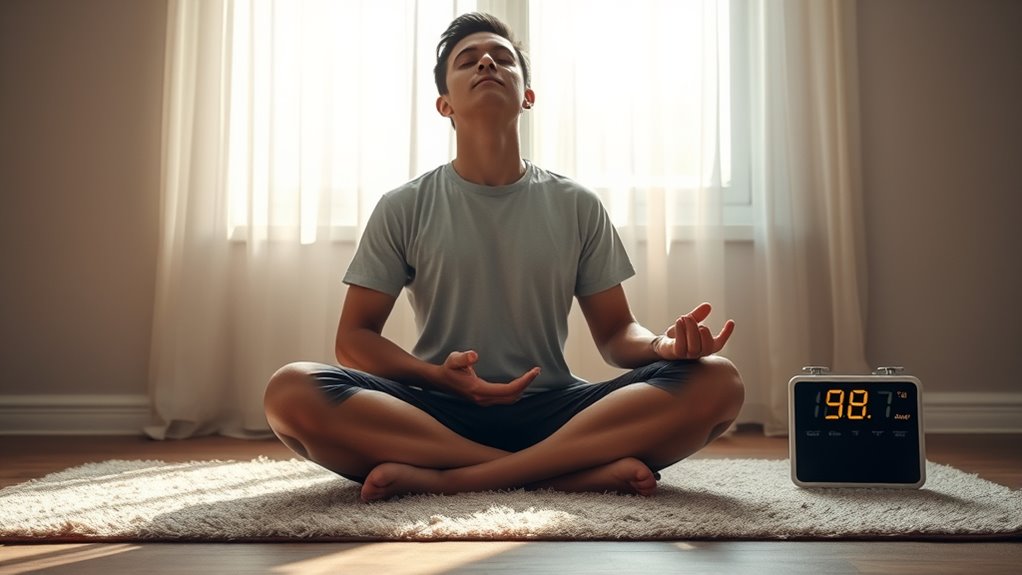
Slow, controlled breathing has measurable effects on stress physiology. When you slow your inhalation and exhalation in a deliberate cadence, you alter autonomic balance in ways that can dampen the endocrine response to acute stress. You’ll notice that repeated practice shifts respiration from a rapid voluntary pattern to a steadier rhythm, which reduces sympathetic drive and stabilizes the hypothalamic–pituitary–adrenal axis output. The mechanism is not mystical: paced breathing enhances vagal tone, lowers cortisol and adrenaline surges, and moderates perceived threat, thereby narrowing the gap between threat appraisal and physiologic response. In practical terms, you’re training your physiology to tolerate forthcoming stressors with less collateral hormonal spillover.
Slow, controlled breathing calibrates autonomic balance, dampening stress hormones and fortifying resilience.
The first subtopic centers on breathing cadence as a controllable moderator of psychophysiology. You don’t merely breathe; you time the breaths. A slower breathing cadence—often around five to six breaths per minute, with equal inhale and exhale lengths—engages baroreceptor and chemoreceptor pathways that signal the brainstem to shift toward parasympathetic predominance. This cadence reduces respiratory rate variability in a way that aligns with heart rate variability (HRV) improvements, reflecting greater autonomic flexibility. As HRV increases, you display a wider repertoire for adapting to stress, which correlates with lower basal and reactive cortisol. In clinical terms, the breathing cadence you adopt is a nonpharmacologic, noninvasive intervention with measurable downstream effects on endocrine and inflammatory markers.
You’ll also see that heart rate variability acts as a proxy for autonomic balance and stress resilience. When you maintain a controlled breath pattern, HRV typically rises during practice, indicating enhanced vagal modulation of cardiac output. Higher HRV is associated with better emotion regulation, reduced subjective stress, and attenuated HPA-axis activation during challenge tasks. Over time, consistent engagement with paced breathing can attenuate reactivity to daily stressors and improve recovery after exposure, which is vital for individuals in high-demand environments. The clinical implication is clear: HRV-guided breathing routines can be calibrated to individual baselines, maximizing cortisol suppression while preserving performance.
From an implementation standpoint, you’ll want to monitor tolerability and avoid hyperventilation. Use a nasal or closed-mouth exhale with a balanced inhale-to-exhale ratio, maintain relaxed shoulders, and sustain the tempo for several minutes per session, multiple times daily if feasible. You should track subjective strain alongside objective cues—pulse, HRV, and, when available, salivary cortisol or other biomarkers—to confirm the pattern’s efficacy. In essence, slow, controlled breathing isn’t a cure-all, but a targeted, evidence-based strategy that reduces stress hormone release by shaping cadence and enhancing autonomic flexibility, with HRV serving as a practical readout of your progress.
Common Questions
How Quickly Can Breathing Changes Impact Hormones?
Breathing changes can impact hormones within minutes to hours. Slow breathing tends to blunt cortisol dynamics and supports autonomic balance, while rapid breathing can spike sympathetic activity and cortisol briefly. You may notice hormonal shifts as quickly as during a single session, with cumulative effects over weeks as vagal tone improves. In clinical terms, you’ll experience measurable improvements in stress biomarkers when you consistently employ slow breathing, especially in high-stress scenarios.
Do All Breaths Equally Reduce Cortisol Levels?
No. Not all breaths equally reduce cortisol. You’ll see greater effects when you lengthen breath duration and maintain exhale focus, promoting parasympathetic dominance. Short, rapid breaths tend to blunt the response or even spike arousal. In practice, you’ll optimize a slow inhale, long exhale, and consistent rhythm to elicit measurable reductions. Two word discussion ideas: breath duration, exhale focus. Clinically, dose matters, so regular, controlled practice yields the most robust cortisol modulation.
Can Breath Work Replace Medical Treatments for Anxiety?
Breath work cannot replace medical treatments for anxiety. You should view it as complementary, not curative, within appropriate clinical guidelines. Breath therapy can reduce physiological arousal and improve coping, but treatments like therapy, medication, and evidence-based care remain essential for many individuals. Follow clinical guidelines, use breath practices as an adjunct, monitor symptoms, and consult your clinician before changing any prescribed plan.
Is Slow Breathing Effective During Panic Attacks?
Yes—you can use slow breathing during a panic attack, and it often helps with symptoms. You’ll likely experience faster relief when you pair it with grounding and cognitive strategies. Use calming techniques that emphasize prolonged exhalations and rhythmic pacing to reduce sympathetic arousal. This approach supports panic management by interrupting escalation and restoring autonomic balance, though it’s not a substitute for professional treatment when anxiety is chronic or severe.
Which Individuals Should Avoid Breath Therapy Sessions?
Some individuals should avoid breath therapy sessions, especially if you have severe pulmonary disease, uncontrolled hypertension, glaucoma, or recent facial trauma. If you’re pregnant, have a history of cerebral events, or experience syncope during breath holds, proceed with caution or skip sessions. You should consult a clinician to ensure calm physiology and breath safety. If guidance isn’t aligned with your medical history, don’t proceed—your safety comes first, even when coincidences hint otherwise.