
You can support daily balance with heart-friendly spices by incorporating small, rotating amounts to avoid taste fatigue while broadening bioactive exposure. These spices bring polyphenols, flavonoids, and organosulfur compounds that may modestly improve insulin sensitivity, inflammation, and endothelial function. Pair them with healthy fats and meals built around fruits, vegetables, and whole grains to boost absorption and long-term benefits. Stay consistent, substitute salt mindfully, and you’ll uncover why pursuing balance matters across days and meals.
Key Points
- Daily spice use supports blood pressure, cholesterol, and inflammation through polyphenols, flavonoids, and organosulfur compounds in everyday pantry staples.
- Rotating spices weekly reduces taste fatigue and broadens bioactive exposure, potentially enhancing cardiovascular benefits.
- Cinnamon, cloves, turmeric, and pepper-clarified fats improve insulin sensitivity and inflammation control; pair turmeric with healthy fats for better absorption.
- Integrate spices with fruits, vegetables, whole grains, and olive oil to boost absorption and amplify heart-friendly effects.
- Track consistency, aiming for four to six spices weekly, and monitor energy, digestion, and appetite as signs of response.
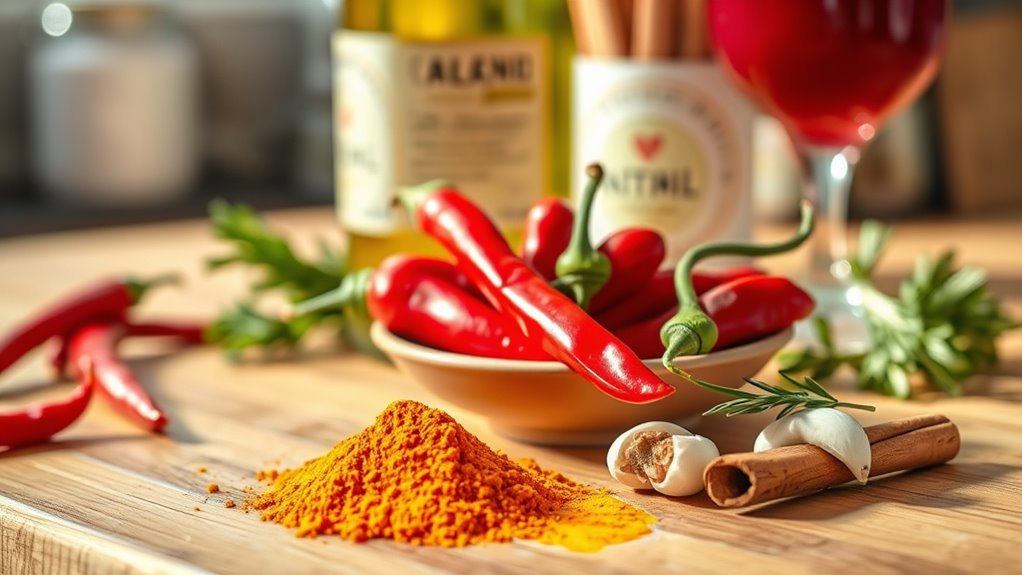
A daily spice routine can be a simple, heart-friendly habit when you choose ingredients that support blood pressure, cholesterol, and inflammation. You’ll learn how small, consistent choices add up, and you’ll see that spice nutrition isn’t just about flavor—it’s about functional benefits for your cardiovascular system. When you pick spices for daily use, you’re prioritizing compounds like polyphenols, flavonoids, and organosulfur components that can influence endothelial function, lipid profiles, and inflammatory markers. You don’t need exotic blends to start; ordinary pantry staples can contribute meaningful effects over time, especially when you pair them with overall dietary patterns that emphasize fiber, lean proteins, and healthy fats.
Your first step is to rotate spices rather than rely on a single daily dose. This supports ritual tolerance—the idea that your body adapts to flavors and bioactive compounds when exposure is regular but varied. A steady rotation reduces the risk of taste fatigue and keeps you engaged, which improves adherence. It also broadens the spectrum of bioactive compounds you ingest, increasing potential cardiovascular benefits. For instance, cinnamon and cloves offer polyphenols linked to improved insulin sensitivity and modest blood pressure benefits in some studies, while turmeric’s curcumin may help curb systemic inflammation when consumed with fat for enhanced absorption.
Rotate spices to boost bioactive variety and support cardiovascular benefits.
As you integrate spices, accuracy matters. Use fresh-ground options when possible, store them away from heat and light, and measure in line with food portions rather than adding large amounts for quick payoff. You’ll notice that even small amounts can accumulate meaningful effects over weeks and months, especially when you maintain a diet rich in fruits, vegetables, whole grains, and healthy fats. Keep in mind that spice nutrition interacts with your overall intake, so the context matters more than any single addition. If you have salt-sensitive hypertension, season with herbs and spices instead of extra salt to manage pressure more effectively.
Consistency beats bursts of intensity. A practical approach is to include a pinch of a different spice at most meals, aiming for at least four to six distinct spices weekly. This strategy supports culinary interest while keeping sodium modest. Pair spices with foods that enhance fat-soluble absorption, such as adding a drizzle of olive oil with turmeric or black pepper. You’ll also benefit from monitoring how you feel—changes in energy, digestion, and appetite can reflect your body’s response to spice patterns and ritual tolerance. By anchoring your routine in evidence-based choices and a varied spice lineup, you support daily balance and cardiovascular health over the long term, without sacrificing flavor.
Common Questions
What Spices Can Lower Blood Pressure Quickly?
Short answer: no spice instantly lowers blood pressure for everyone. Some evidence points to spices like cayenne, garlic, and turmeric offering modest, quick-acting benefits as part of a broader plan, but they’re not a substitute for proven meds. You might explore spice backed blood pressure strategies, while recognizing individual responses vary. Use these Quick acting herbal boosters cautiously, and pair with a balanced diet, exercise, and doctor-guided treatment. Always check with your clinician before changes.
Do Heart-Friendly Spices Interact With Medications?
Spices act like narrow bridges, symbolizing careful checks between your meds and flavor. Yes, heart-friendly spices can interact with medications, so you should consult your clinician before combining them. This is about medication interactions and spice timing: some spices affect enzymes or blood pressure, others alter absorption. You’ll want to pace your spice use with your dosing schedule, monitor effects, and report any unusual symptoms promptly to ensure safe, evidence-based pairings.
Are There Any Spicy Foods to Avoid With Heart Conditions?
Yes, there are spicy foods to avoid with certain heart conditions. You should watch for overly spicy dishes if they trigger chest discomfort, worsen reflux, or raise blood pressure. In heart condition considerations, limit high-sodium sauces, heavy fats, or irritating additives. Opt for milder spices and monitor your body’s responses. If you’re on specific meds or have arrhythmias, discuss spice intake with your clinician to tailor safe, evidence-based guidelines for you.
How Much Spice per Day Is Safe for Heart Health?
Spice intake varies, but a safe target is moderate, about half a teaspoon to one teaspoon of dried spices daily, depending on your tolerance and cardiovascular status. You can enjoy flavorful meals without overdoing it. If you have high blood pressure or other heart issues, start lower and monitor your response. Two word discussion ideas: spice safety. This approach is evidence-based, emphasizing individualized limits and mindful eating to support heart health.
Can Spices Replace Medical Treatment for Heart Issues?
Spices cannot replace medical treatment for heart issues. You should consult clinicians and follow prescribed therapies; spices can complement care with heart-healthy flavor only. When considering Spices vs. treatment, rely on evidence-based guidelines and individualized plans. Some spices may support lipid control or blood pressure modestly, but they don’t fix structural problems or acute conditions. Use them as part of a balanced diet, not as substitutes for proven interventions.