
Think of your arteries as a high‑tension bridge that stays strong when its cables aren’t rusting away; antioxidant-rich foods help prevent that rust. You’re reducing oxidative stress and preserving nitric oxide bioavailability, which supports endothelial function and healthy vasodilation. With a diet rich in colorful fruits, vegetables, whole grains, and legumes, you gain polyphenols, vitamins C and E, and carotenoids that synergistically sustain vascular elasticity. The effect is subtle but meaningful, and the next detail could change how you approach meals.
Key Points
- Antioxidant-rich foods reduce vascular oxidative stress, supporting endothelial cell health and nitric oxide availability.
- They improve arterial elasticity by preserving elastin and reducing inflammation in the vessel wall.
- Diets high in fruits, vegetables, and whole foods attenuate LDL oxidation and macrophage infiltration in arteries.
- Polyphenols, vitamins C and E, carotenoids, and flavonoids collectively enhance redox signaling and vascular function.
- Pairing diverse antioxidant sources with whole grains and healthy fats sustains benefits across aging and lifestyle factors.
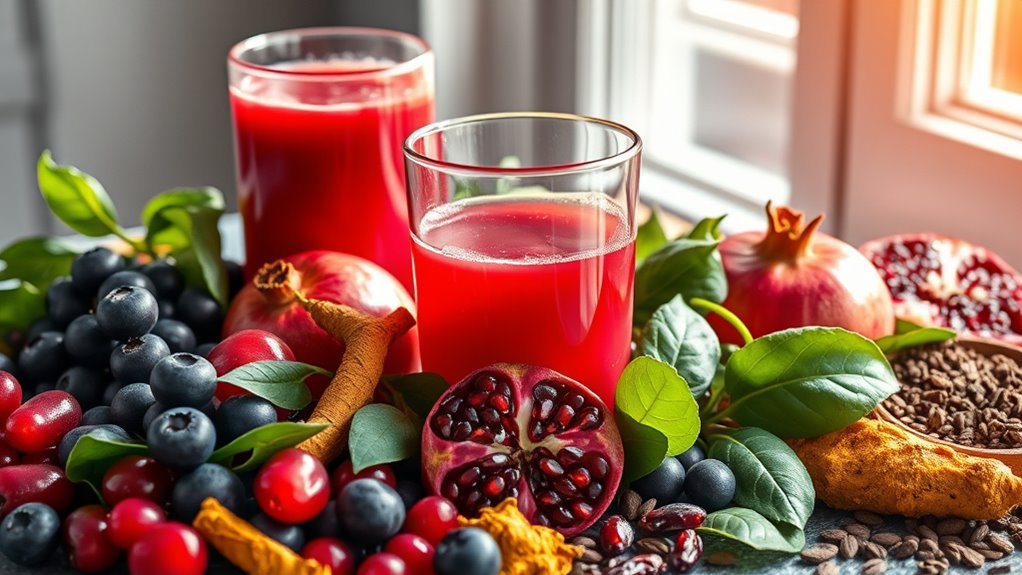
Antioxidant-rich foods support artery strength by reducing oxidative stress and improving endothelial function, which helps maintain vascular elasticity and lowers cardiovascular risk. You’ll see the link between dietary antioxidants and vascular markers in many studies, where intake correlates with improved flow-mediated dilation and reduced arterial stiffness. In practical terms, your choices matter: frequent inclusion of antioxidant sources can modulate redox signaling and preserve nitric oxide bioavailability, supporting artery resilience over time. Nutrition science highlights that polyphenols, vitamins C and E, carotenoids, and flavonoids contribute to these effects, though action varies by compound and food matrix. You’re encouraged to consider overall dietary patterns rather than single nutrients, since synergistic interactions often drive the observed benefits.
Antioxidant-rich foods bolster artery resilience by reducing oxidative stress and improving endothelial function.
Dietary patterns emphasizing fruits, vegetables, whole grains, legumes, nuts, and minimally processed fats consistently associate with better vascular health outcomes. When you consume antioxidant sources, you may attenuate LDL oxidation and limit macrophage infiltration in the intima, processes linked to early atherogenesis. This translates to measurable improvements in endothelial function, which is a proxy for arterial responsiveness and a determinant of long-term artery resilience. You should also recognize that aging and comorbidities can alter antioxidant metabolism; thus, maintaining adequate intake across the lifespan supports sustained vascular health.
In practice, you can target diverse antioxidant sources to support arterial strength without relying on supplements as a substitute for whole foods. Favor colorful produce, berries, leafy greens, and whole legumes, then pair them with intact grains and healthy fats to optimize bioavailability and vascular benefits. You’re not merely chasing a numeric daily value—you’re fostering a composite profile of compounds that modulate oxidative stress, inflammation, and endothelial signaling. The evidence indicates that regular consumption aligns with favorable biomarkers and clinical endpoints related to arterial function and cardiovascular risk reduction.
Keep portions reasonable and cooking methods gentle when possible to preserve antioxidant activity. Minimal processing tends to retain polyphenols and vitamins that support vascular health. You should monitor total caloric balance alongside nutrient density to avoid excess energy intake, which can counteract vascular benefits. For patients with established risk factors, emphasis on antioxidant sources within a balanced, evidence-informed plan remains appropriate, but it should be integrated with other lifestyle factors, including physical activity, blood pressure control, and lipid management. In sum, your dietary choices—rich in antioxidant sources and varied across foods—contribute to artery resilience, support vascular health, and reflect core findings of nutrition science without overreliance on isolated compounds.
Common Questions
What Are the Best Daily Servings of These Foods?
What are the best daily servings of these foods? Aim for about 2–3 servings per day, with a serving defined as roughly 1 cup of berries or 1 medium fruit, or 1/2 cup of cooked vegetables. Maintain daily servings consistently and consider serving frequency spread across meals. Evidence suggests gradual, regular intake supports vascular health; avoid excess that could cause GI distress. Tailor to your calories and preferences for sustainable adherence.
Do Antioxidants Reverse Existing Artery Damage?
Yes, antioxidants can help slow progression but don’t reverse existing artery damage. You should rely on reliable antioxidant sources as part of a thorough plan, including risk factor management. Your daily intake guidelines emphasize variety and dose within evidence-based ranges; no single nutrient reverses advanced atherosclerosis. You’ll likely see stabilization rather than restoration, so maintain consistent intake and monitor with your clinician, pairing antioxidants with proven therapies for best outcomes.
Are Synthetic Antioxidants Unsafe or Better Than Natural?
Synthetic antioxidants aren’t categorically unsafe, but evidence favors natural forms in many cases. When comparing synthetic vs natural, safety concerns exist for high-dose supplements, potential pro-oxidant effects, and variable bioavailability. You should consider dietary sources first, as they provide a complex mix of compounds with established benefits. If you use supplements, weigh quality, dosage, and medical guidance. Overall, natural antioxidants often pose fewer safety concerns than synthetic options, especially for long-term use.
Can Cooking Methods Reduce Antioxidant Levels in Foods?
Cooking methods can reduce antioxidant levels, but the extent varies by technique. You’ll see greater antioxidant retention with gentle methods (steaming, short blanching) and lower retention with high-heat or long cooking (frying, prolonged boiling). To maximize antioxidant retention, choose quick, low-heat processes and minimize water exposure. Overall, expect some loss, but careful method selection preserves meaningful antioxidant content.
Do Supplements Replace a Healthy Antioxidant-Rich Diet?
No, antioxidant supplements don’t replace a healthy antioxidant-rich diet. Instead, you should view supplements as a possible add-on, not a diet-only approach. Evidence shows whole foods provide synergistic nutrients and fiber that supplements can’t fully mimic. Rely on a varied diet rich in fruits, vegetables, nuts, and whole grains; reserve supplements for specific deficiencies or guidance. If you choose them, use them cautiously and under medical advice to support, not dominate, vascular health.