
You feel the spine align like a well-titted highway, carrying blood with less resistance. When you stand or sit with neutral posture, arteries and veins work with your core, not against it, reducing pressure points. You’ll avoid leg pooling and keep oxygen flowing to muscles and organs more efficiently. Small postural checks and micro-movements prevent stagnation, but there’s more to optimize—let’s explore how these tweaks can fit into your day.
Key Points
- Good posture reduces vessel compression, improving blood flow and lowering muscular effort during activity and recovery.
- Neutral spine alignment minimizes constriction in thoracic and abdominal cavities, aiding venous return from the limbs.
- Proper ergonomic alignment prevents persistent pressure on pelvic and leg vessels, supporting downstream circulation.
- Dynamic posture and light movements interrupt venous pooling during daily activities, sustaining circulation efficiency.
- Brief, regular posture checks and cues (head over shoulders, hips supported) lead to measurable circulatory benefits over time.
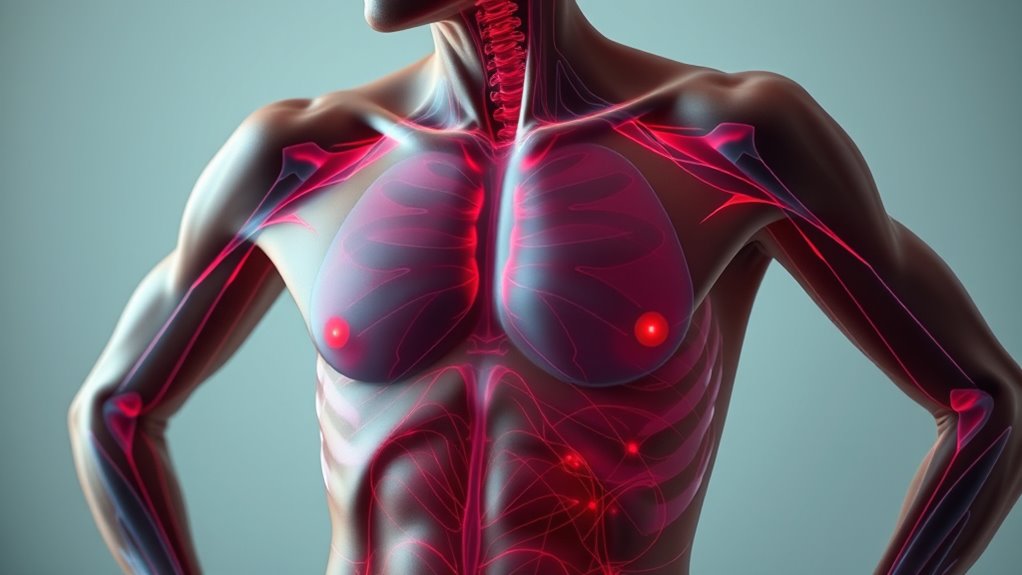
Good posture isn’t just about looking confident—it’s a practical way to support blood flow throughout your body. When you sit or stand with proper alignment, you reduce unnecessary compression on blood vessels and nerves, which means your circulatory system can move more freely. You’ll feel steadier, and your muscles won’t have to work as hard to maintain a position, which preserves energy for activity and recovery. This is not vague theory; it’s about measurable effects on circulation mechanics and how your body distributes blood when posture is optimized.
Good posture supports blood flow, reducing vessel compression and conserving energy for activity and recovery.
From an ergonomics impact perspective, the way you position your head, shoulders, spine, hips, and feet matters. A neutral spine aligns the vertebrae so the thoracic and abdominal cavities aren’t constricted, supporting more even venous return from the limbs. When your hips are tucked or your pelvis tilts forward excessively, you create subtle, persistent pressure on the lower back and pelvic vessels. Over time, that pressure can limit smooth blood flow, contributing fatigue or discomfort. Small, intentional adjustments—sitting with feet flat, knees at roughly a right angle, and back supported—improve the downstream flow and help your muscles work less to sustain posture.
You’ll notice this in daily routines, not just in a clinic. In prolonged sitting, micro-movements matter: shifting weight, standing briefly, or changing hand and arm positions can interrupt venous pooling in the legs. In standing tasks, distributing weight evenly across both feet, keeping knees softly bent, and engaging core stabilizers reduces venous compression behind the knees and in the groin area. These adjustments support circulation mechanics by promoting smoother blood return to the heart and reducing localized fatigue.
Evidence supports a patient-centered approach: posture is dynamic, not a fixed pose. Prioritizing frequent, brief posture checks can yield meaningful gains in comfort and blood flow without requiring dramatic changes. For most people, ergonomic tweaks—chair height, desk setup, screen level, and keyboard placement—create a foundation that enhances circulation. When you make posture improvements, you’re not just preventing discomfort; you’re facilitating more consistent oxygen delivery to muscles during activity and better nutrient exchange during rest.
Practice and consistency matter. Start with a quick assessment: is your head aligned over your shoulders, are your ears over your mid-shoulders, and are your hips evenly supported? If not, adjust gradually. Use cues like “shoulders relaxed, chest open, spine neutral.” By focusing on ergonomics impact and circulation mechanics in everyday tasks, you support a more reliable blood flow pattern, reduce perceived effort, and promote sustainable, evidence-based improvements in how you feel and perform.
Common Questions
How Quickly Can Posture Changes Affect Blood Flow?
how quickly can posture changes affect blood flow? In you, improvements can begin within minutes, with noticeable changes often seen within 5–15 minutes of adjusting posture. Your blood flow may improve as spinal alignment and chest expansion open vessels and reduce venous pooling. The time course varies by individual, activity level, and underlying conditions, but consistent posture adjustments typically yield incremental benefits across short sessions and longer-term daily practice.
Do All Body Types Benefit Equally From Posture?
Not exactly—no body type benefits identically from posture. You’ll likely gain improvements in comfort, breathing, and circulation when you vary your posture and avoid sustained positions. Individual differences in anatomy, health, and activity influence outcomes, so two word discussion ideas can help you reflect: posture variability. Track how changes affect symptoms, stay patient-centered, and use evidence-based steps like gradual adjustments and rest breaks to optimize flow for you.
Can Posture Fix Chronic Circulation Issues Without Exercise?
Short answer: posture alone can’t fix chronic circulation issues without exercise. You may benefit from better posture for passive movement benefits and improved venous return, but persistent problems typically require targeted activity, medical evaluation, and possibly treatment. Consider combining posture optimization with gradual, physician-approved exercise, compression if advised, and lifestyle changes. If symptoms persist, seek care promptly to identify underlying causes and tailor a comprehensive plan for your circulation.
Are There Risks to Altering Posture for Blood Flow?
Are there risks to altering posture for blood flow? Yes, you should weigh risk tradeoffs, consider discomfort considerations, and monitor symptoms. You might experience short-term numbness, muscle fatigue, or temporary dizziness if you overcorrect. Slow, gradual changes, proper alignment, and professional guidance reduce risk. If you have back, neck, or vascular conditions, stop and seek evaluation. Stay aware of persistent pain, tingling, or worsened circulation and adjust or revert as needed.
Should Posture Be Adjusted During Sleep or Stillness?
Yes, posture should be adjusted during sleep or stillness based on comfort and safety. Prioritize neutral alignment and avoid prolonged awkward positions. Evidence suggests alternating positions can reduce pressure points, but extreme twists aren’t necessary. Focus on the balance between posture during sleep and stillness vs movement; small frequent shifts can help, yet remain mostly still if you’re comfortable. Listen to your body, use supportive pillows, and avoid restrictive positions that limit circulation.