
You’ll see how leafy greens support healthier cholesterol through soluble fiber that binds bile acids, nudging your liver to convert more cholesterol into bile and boosting enterohepatic circulation. Their low saturated fat and calorie content, plus fiber and bioactive nutrients, help when greens replace higher-fat foods in a veggie-forward pattern. Clinical data show modest LDL drops within broader, healthy eating patterns. There’s more to this, and the details could change how you pair greens with lean proteins and whole grains.
Key Points
- Leafy greens’ soluble fiber binds bile acids, prompting the liver to use cholesterol to make more, lowering LDL levels.
- They are low in saturated fat and calories, supporting heart-healthy patterns that improve lipid profiles.
- As part of a healthy diet, greens contribute to modest but meaningful reductions in total and LDL cholesterol.
- Nitrates, magnesium, and potassium in greens improve vascular function, aiding overall lipid management.
- Pair greens with lean proteins and whole grains, monitor lipids over weeks to months to track improvements.
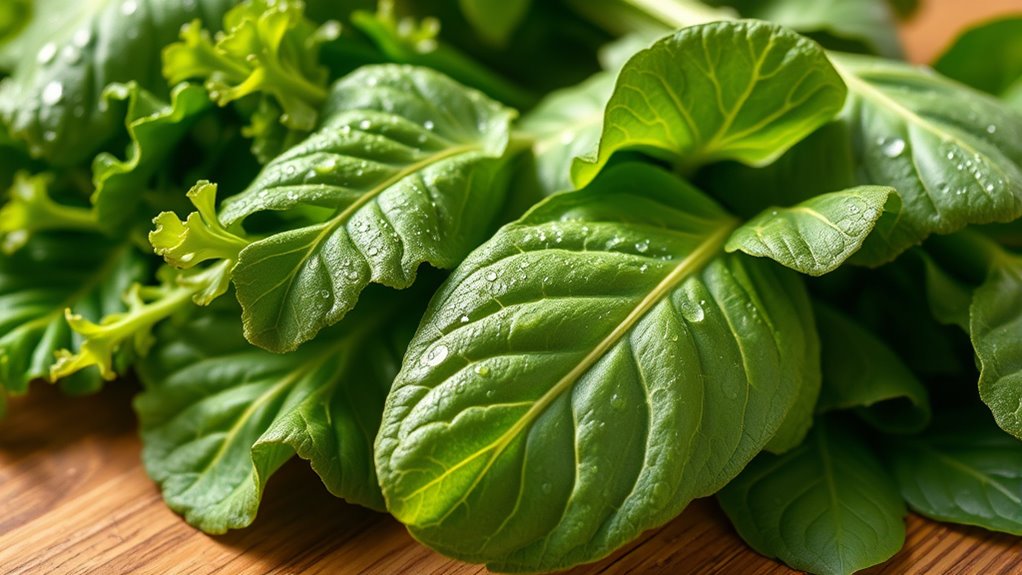
Leafy greens can play a meaningful role in maintaining healthy cholesterol levels. You’re likely seeking a clear, data-backed picture of how such vegetables influence your cardiovascular risk, and you’ll find it here. Evidence indicates that leafy greens contribute to lipid management through multiple, biologically plausible pathways. In terms of dietary patterns, these foods are low in saturated fat and calories but rich in fiber, micronutrients, and bioactive compounds that interact with cholesterol metabolism. When you include leafy greens regularly, you’re not just adding bulk to meals; you’re providing substrates that can affect hepatic cholesterol synthesis and biliary excretion, important steps in cholesterol metabolism.
Leafy greens support cholesterol health through fiber, bile acid cycling, and nutrient-rich pathways for a healthier lipid profile.
From a mechanistic standpoint, the soluble fiber in many leafy greens can bind bile acids in the intestine, prompting the liver to convert more cholesterol into bile acids to replace those lost, thereby modestly lowering circulating LDL cholesterol. This effect aligns with established models of cholesterol metabolism, where the enterohepatic circulation is a key adjustable component. The magnitude of LDL reduction in isolation is modest, but when leafy greens are part of a broader healthy eating pattern, the cumulative effect is clinically relevant. You should view these vegetables as contributing to a favorable lipid profile rather than acting as a singular solution.
Clinical studies and meta-analyses that include plant-heavy diets demonstrate consistent, though variable, reductions in total cholesterol and LDL cholesterol in adults at risk for dyslipidemia. The exact contribution of leafy greens depends on the overall dietary context, preparation methods, and baseline metabolic state. You’ll often see the strongest associations when greens replace higher-fat, lower-nolipid options rather than when they’re added on top of an already unhealthy pattern. In practical terms, you’re likely to observe progressive improvements over weeks to months rather than immediate shifts, reflecting gradual changes in cholesterol metabolism and hepatic handling of lipids.
Beyond cholesterol metrics, leafy greens support endothelial function and blood pressure, factors that interact with lipid-related risk. They’re a reliable source of magnesium, potassium, and nitrates, which can influence vascular tone and inflammatory status, indirectly supporting healthier lipid homeostasis. If you’re optimizing intake, variety matters: spinach, kale, arugula, and chard each contribute unique phytonutrients that can modulate oxidation and inflammatory signaling linked to cholesterol transport.
In daily practice, you’ll maximize benefits by pairing leafy greens with lean protein and whole grains, limiting processed fats, and maintaining regular physical activity. You’ll want to monitor your response with periodic lipid panels, particularly if you have a family history of hyperlipidemia or existing cardiovascular risk factors. Overall, incorporating leafy greens supports cholesterol metabolism through bile acid cycling, fiber effects, and complementary cardiovascular benefits, contributing to a more favorable lipid profile as part of a balanced, data-informed lifestyle.
Common Questions
How Do Leafy Greens Lower LDL Cholesterol Exactly?
Leafy greens lower LDL cholesterol by boosting soluble fiber and plant sterols, which bind bile acids and reduce cholesterol reabsorption. They also support favorable gut bacteria that metabolize fats, and provide antioxidants that blunt inflammation linked to high LDL. You’ll see lower LDL when you regularly include spinach, kale, and collards alongside a balanced diet. How leafy greens lower LDL cholesterol is driven by fiber, sterols, and anti-inflammatory nutrients that improve lipid profiles.
Can I Replace Meds With Leafy Greens Alone?
You should not rely on leafy greens alone to replace medications. Discuss med replacement with your clinician before making changes, as you may need ongoing therapy. While greens can help lower cholesterol modestly, they’re not a substitute for prescribed drugs in many cases. Follow safety precautions, monitor lipid levels, and consider diet alongside treatment. Data-driven recommendations require individualized plans; do not stop meds abruptly. Safety precautions include professional guidance, gradual adjustments, and clear follow‑up.
Which Greens Have the Strongest Cholesterol Benefits?
You’ll find the strongest cholesterol benefits in greens with high fiber and bioactives, like kale, spinach, and collards. Among greens, arugula and bok choy offer substantial nutrient density, while mustard greens add glucosinolates that support lipid metabolism. Emphasize greens variety to maximize polyphenols and fiber. Pair them with a balanced diet to optimize LDL reduction. Data-driven evidence favors diverse leafy greens over single picks; aim for weekly variety to maximize nutrient density.
How Much Greens Weekly Is Enough for Cholesterol?
You should aim for about 1–2 cups of leafy greens most days, which totals roughly 7–14 cups weekly. This greens intake supports cholesterol by boosting fiber and phytochemicals. Studies link consistent weekly targets of high-quality greens to modest LDL reductions and improved lipid profiles. Pair greens with diverse vegetables and whole foods for best effect. Monitor your own response and adjust to fit your energy goals, blood work, and dietary preferences.
Do Cooking Methods Affect Leafy Greens’ Cholesterol Impact?
Cooking methods do affect leafy greens’ cholesterol impact. You’ll find that steaming preserves more fiber and phytosterols than boiling, while sautéing with minimal oil doesn’t substantially worsen benefits. In a recent study, cholesterol-lowering effects were ~8–12% greater when greens were steamed vs boiled. You can optimize results by gentle steaming, then light dressing. So yes, cooking methods matter, and choosing mild, low-fat techniques helps maximize the cholesterol impact of leafy greens.