
You can boost blood flow by choosing foods that boost nitric oxide, reduce inflammation, and support healthy fats and protein. Nitrate-rich vegetables, like beets and leafy greens, promote vasodilation, while antioxidants help preserve nitric oxide. Anti-inflammatory patterns with omega-3s and fiber protect vascular function over time, and olive oil, nuts, and fatty fish improve lipid profiles and endothelium health. Start with these patterns and stay curious about how meals influence perfusion throughout the day.
Key Points
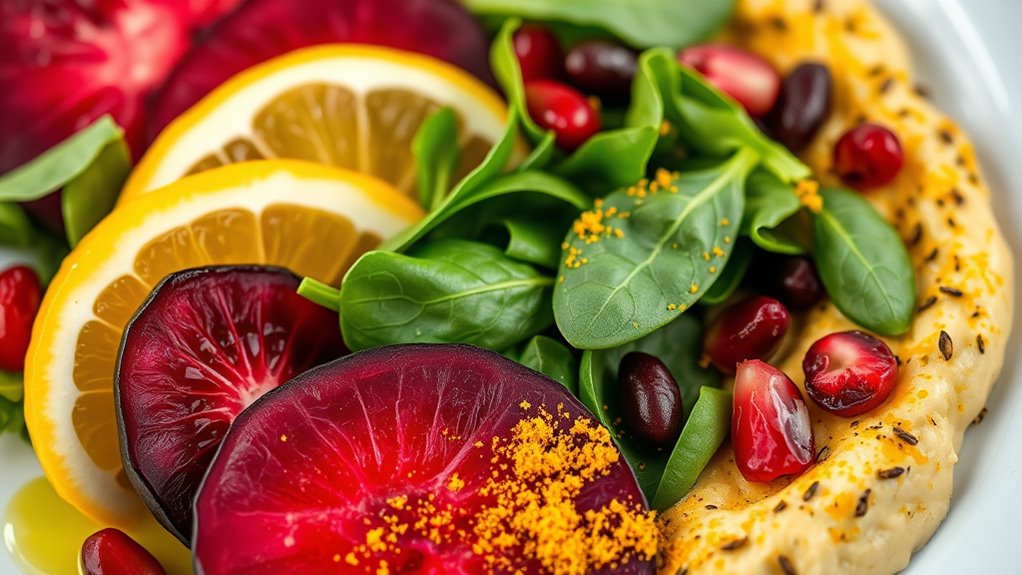
- Nitrate-rich vegetables (beetroot, leafy greens) convert to nitric oxide, promoting vasodilation and improved peripheral blood flow.
- Antioxidants (vitamin C, polyphenols) preserve nitric oxide availability and enhance bioavailability within whole meals.
- Anti-inflammatory dietary patterns (fruits, vegetables, whole grains, omega-3s) support consistent vascular function.
- Healthy fats (olive oil, fatty fish, nuts) improve endothelial health and reduce triglycerides linked to blood flow.
- High-quality protein with fiber and nitrate-rich veg sustains perfusion without excess calories.
Healthy blood flow is essential for delivering oxygen and nutrients to tissues and supporting cardiovascular health, and certain foods can help optimize this process. You’ll learn how specific nutrients support endothelial function, nitric oxide production, and microcirculation, all of which influence overall blood flow. In food science terms, the way nutrients are absorbed, metabolized, and interact with enzymes matters for practical outcomes, so you’ll benefit from focusing on foods that reliably provide active compounds in bioavailable forms. You’ll want to prioritize patterns supported by clinical data, rather than isolated anecdotes, to guide daily choices that may translate into measurable effects.
Healthy blood flow relies on nutrients that support endothelial function, nitric oxide, and microcirculation within a bioavailable, evidence-based framework.
L-arginine and nitrate-rich vegetables offer a mechanistic link to vasodilation, which can enhance peripheral blood flow when combined with a heart-healthy pattern. You’ll consider how dietary nitrate from beetroot, leafy greens, and other vegetables is converted to nitric oxide, a signaling molecule that relaxes the vascular smooth muscle. This isn’t about miracle cures; it’s about supporting endothelial responsiveness and rhythm of flow across the arterial tree. In practical terms, you’ll structure meals to include vegetables and nitrate-rich options alongside whole grains, lean protein, and healthy fats to support sustained blood flow without large postprandial spikes.
Antioxidant-rich fruits, vegetables, and herbs contribute to vascular integrity by reducing oxidative stress and preserving nitric oxide availability. You’ll recognize that polyphenols, flavonoids, and vitamin C are most effective when consumed as part of meals rather than as isolated supplements, due to synergistic interactions within whole foods. This aligns with food science principles that emphasize matrix effects, fiber content, and nutrient pairing to optimize bioavailability. You’ll also note that chronic inflammation can blunt vascular function, so anti-inflammatory dietary patterns anchored in fruit, vegetables, whole grains, and omega-3 sources may support more consistent blood flow over time.
Dietary fats matter for endothelial health. You’ll prefer monounsaturated and omega-3 fats from olive oil, fatty fish, nuts, and seeds, which may reduce triglyceride levels and improve lipid-mediated vascular function. Meanwhile, you’ll limit saturated fats and highly processed items that can impair endothelial responsiveness in susceptible individuals. Protein quality also plays a role; you’ll aim for high-biologic-value sources to support muscle perfusion and metabolic efficiency without excessive caloric load.
Common Questions
Do Supplements Improve Blood Flow as Effectively as Foods?
When it comes to efficacy, supplements aren’t automatically as effective as foods. You’ll find variable supplement efficacy depending on formulation and absorption, but whole foods offer synergistic nutrients that support endothelial function and circulation. Rely on food-based strategies first, then consider evidence-backed supplements as adjuncts. You can optimize results with a balanced diet rich in nitrates, omega-3s, and antioxidants. If you choose supplements, review trials and consult your clinician for personalized guidance.
Which Foods Raise Blood Flow Without Increasing Blood Pressure?
You can choose foods like leafy greens, beets, berries, and fatty fish, which tend to raise blood flow without raising blood pressure when eaten in moderation. In comparing foods vs supplements, you’ll often see steadier, more tolerable effects from whole foods. Focus on timing of benefits vs risks, and don’t rely on a single item; instead, pair nutrients for vascular support. Evidence-based, nutrient-focused guidance emphasizes consistency and individualized responses.
How Quickly Can You See Blood Flow Benefits From Diet?
You’ll typically notice subtler improvements in blood flow within days to weeks, depending on your baseline health and consistency with dietary changes. Your endothelium reacts to nitrite-rich foods and antioxidants, with peak effects often seen after about 2–4 weeks of regular intake. Two word discussion idea 1: meal timing. Two word discussion idea 2: nutrient synergy. You’ll optimize results by pairing vegetables, whole grains, and healthy fats, while limiting processed sugars and sodium.
Are There Risks Mixing These Foods With Medications?
Yes, there are potential cautionary interactions you should watch for with medications. Mixing certain foods with drugs can alter absorption, metabolism, and effectiveness, so you need to contemplate cautionary interactions and how medication timing matters. You’ll benefit from reviewing evidence-backed resources, consulting your clinician, and coordinating meals around dosing. In practice, maintain consistent timing, avoid large shifts in fiber or fat intake, and report any adverse effects promptly to adjust plans safely.
Do Dietary Changes Affect Microcirculation Versus Macro Circulation?
Every sip and bite tunes your inner river, and yes, dietary changes affect microcirculation distinctions and macro circulation nuance. You’ll notice micro changes in capillaries and venules, improving nutrient delivery and waste removal, while macro shifts reflect overall vessel flexibility and blood pressure. You should focus on evidence-based, nutrient-dense patterns—fiber, antioxidants, omega-3s, and modest sodium reduction—then monitor biomarkers and symptoms for clinical clarity and individualized progress.