
You probably don’t realize how much your body’s energy rhythm hinges on meals you schedule rather than just what you eat. Routine-based eating anchors your day, signaling when to fuel and when to rest so energy stays steadier. By starting with a deliberate breakfast and pairing regular, balanced snacks, you reduce hunger spikes and smooth performance. It’s an iterative approach—measure how you feel, adjust timing, remeasure—to build a reliable energy trajectory that fits your life, if you’re willing to try.
Key Points
- Routine-based eating regularizes energy intake by aligning meals with body rhythms, reducing peaks and crashes.
- Breakfast timing serves as an anchor, guiding subsequent fueling decisions and energy stability.
- Consistent snack intervals smooth energy troughs, supporting steady cognitive function throughout the day.
- An observational cycle (measure, adjust, remeasure) enables small, data-driven refinements for reliable improvements.
- Practical rules focus on fit, simplicity, and empirical adjustments to maintain two-to-three days of stable energy before reassessing.
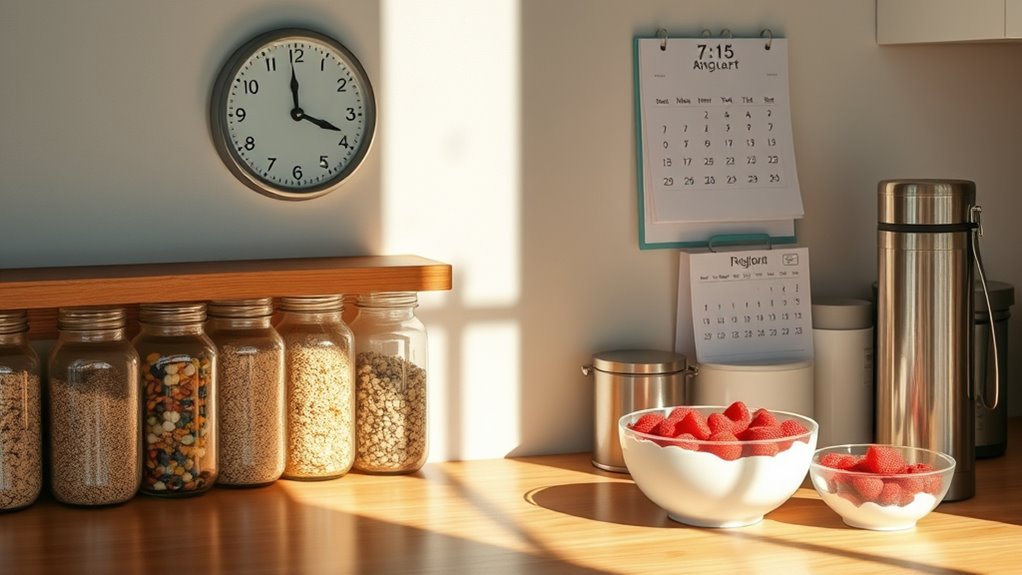
Routine-based eating regularizes energy intake by aligning meals and snacks with your body’s natural rhythms. You assess your daily energy needs by observing patterns in alertness, hunger, and performance, then structure eating around predictable windows. In this approach, breakfast timing becomes a deliberate anchor, not a ritual, and it informs subsequent decisions about when to fuel, sustain, and recover. You track how you feel before and after meals, aiming for stable vitality rather than peaks and crashes. The methodology emphasizes consistency over rigid schedules, allowing you to adjust only when evidence shows sustained disruption in energy.
Routine-based eating anchors energy to body rhythms, balancing meals for steady vitality.
You identify a baseline of wakeful hours and document fluctuations in cognitive clarity across the day. With that data, you select a breakfast timing that aligns with the onset of your strongest morning drive. If you tend to be alert soon after waking, you may prefer an earlier meal; if wakefulness arrives later, you may delay until a natural inflection point. The goal is to minimize prolonged hunger that can trigger overeating and to prevent late-day fatigue caused by prolonged fasting. You understand that timing influences insulin response, glucose stability, and subjective energy, so you prioritize consistency within a realistic range rather than perfection.
Snack consistency emerges as a core principle. You commit to regular intervals that correspond to your energy troughs, preventing extreme lows that disrupt performance. By maintaining similar snack sizes and macronutrient balance at each interval, you reduce glucose variability and support even cognitive function. If you notice a mid-morning drop, you adjust the snack to restore momentum without introducing excessive calories or heavy digestion that could impair later activities. The aim is to smooth energy trajectories, not to micromanage every bite.
Your observational framework treats meals as signals for metabolic state. Breakfast timing sets a reference point, while snack consistency fills gaps between meals. Over time, you evaluate whether shifts in work demands, exercise, or sleep quality necessitate recalibration. You apply small, data-driven changes and monitor responses for several days before concluding. This iterative process favors reproducible improvements over speculative adjustments.
You also consider practical constraints. You design a plan that fits your routine, access to food, and cultural preferences, avoiding unnecessary complexity. You incorporate a simple rule: if energy remains steady for two to three days, you preserve the pattern; if you experience persistent instability, you reassess the timing window and snack composition. The emphasis remains empirical—measure, adjust, and remeasure—rather than rely on assumptions about what should work.
Common Questions
How Long Does It Take to See Energy Changes From Routines?
Energy changes from routines typically become noticeable within 1–3 weeks. You’ll likely observe steadier energy after consistent sleep patterns and regular meal timing. Early improvements may show up as fewer afternoon slumps and smoother mornings. By week two, you might feel enhanced cognitive clarity and sustained stamina through the day. If you slip on sleep patterns or meal timing, reestablish them promptly to regain momentum and minimize energy fluctuations. Consistency is key for reliable results.
Can Routines Help With Late-Night Cravings?
Yes, routines can help with late-night cravings. When you schedule balanced meals and a predictable evening snack, craving management improves because hunger cues align with your planned intake. You’ll reduce impulsive decisions by creating a short, fixed pre-bed snack and a calming wind-down routine. This approach lowers late night snacks triggers, stabilizes blood sugar, and supports consistent energy. Track responses, adjust portions, and maintain consistency for measurable, empirical improvements in craving management.
Do Routines Work During Travel or Holidays?
Yes, routines work during travel or holidays, though you’ll adapt them. You can maintain travel routines by setting consistent meal times, planning meals during trips, and prioritizing routine adherence on vacation. Use holiday scheduling to block windows for meals and snacks, even on busy days. Track energy patterns, adjust portions, and keep hydration steady. Your meals during trips should mirror your usual structure, supporting stable energy despite new surroundings.
What if I Skip a Meal in a Routine?
If you skip a meal in a routine, you may feel energy dips later, but it isn’t guaranteed to derail your day. Your body adapts, yet relying on irregular timing can worsen hunger cues and mood. Track how you respond and adjust rather than skip routinely. Consider allergies or sensitivities that might flare with gaps. Prioritize sleep support, and keep balanced snacks handy to stabilize energy and prevent noticeable dips.
Can Routines Address Mood Fluctuations?
You’ll notice mood stability improves when you honor a steady rhythm. Picture a metronome syncing your thoughts, each beat guiding choices toward calm, not chaos. The trick lies in routine consistency: regular meals, sleep, and activity anchor your emotions, reducing spikes and dips. Empirically, consistent cues lower reactivity, while varied schedules raise unpredictability. So yes, routines can address mood fluctuations by providing dependable patterns that your brain learns to trust.