
Are you tired of post-meal spikes leaving you tired, hungry, or craving faster-acting carbs? You’re not alone. Balancing plate portions can have a real impact on how you feel after meals, helping you stay steadier and more in control without turning your life upside down. This simple, practical approach is designed for real people juggling work, family, and everything in between.
Imagine a steady rhythm you can apply today—without overhauls or radical dieting. By starting with easy plate pacing—half non-starchy vegetables, a quarter lean protein, a quarter complex carbs—and pairing it with fiber, healthy fats, and good hydration, you can reduce post-meal glucose spikes and curb cravings. It’s evidence-informed, approachable, and genuinely doable. Let’s explore how this could matter for you.
Key Points
- Plate-based pacing: fill half with non-starchy vegetables, a quarter with lean protein, and a quarter with complex carbs to steady glucose.
- Pair carbs with protein or fiber at each meal to slow glucose rises and sustain energy.
- Stay hydrated and include electrolytes; sip water with meals to blunt post-meal spikes.
- Maintain consistent sleep and routines; regular bedtimes improve insulin sensitivity and daytime glucose control.
- Track meals, snacks, and readings to spot patterns and make small, actionable adjustments.
Tiny Shifts, Big Impact: Breakfast Habits That Stabilize Blood Sugar
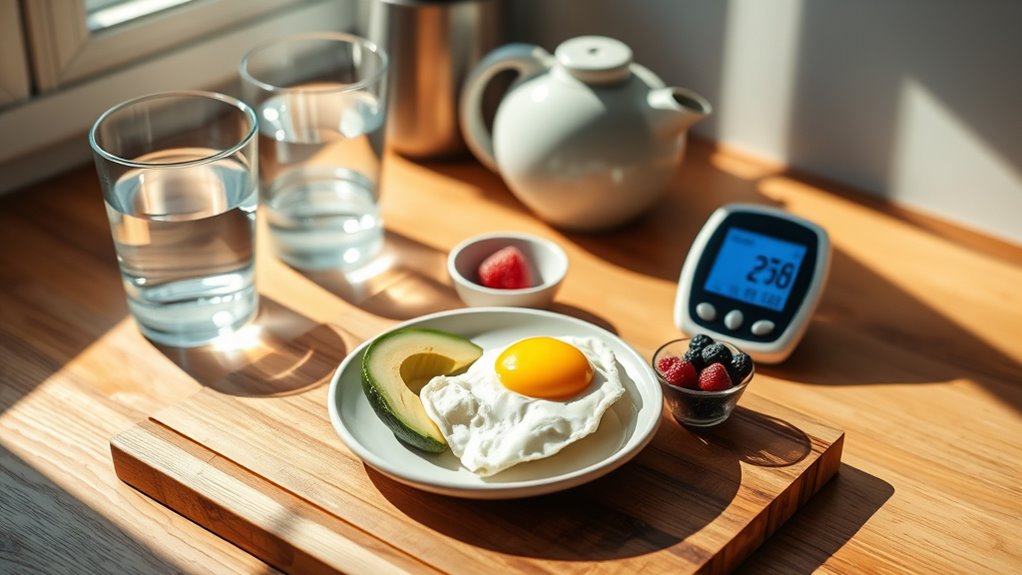
Starting the day with breakfast that supports steady blood sugar can set the tone for the hours ahead. You’ll notice small tweaks that add up: pair protein with fiber, like eggs and oats, to slow glucose rise. Include healthy fats, such as avocado or nuts, to extend satiety and smooth energy. Choose low-glycemic sources: plain yogurt, berries, whole grains, or seeds, so meals avoid sharp spikes. Hydration supports digestion and glucose balance, so add water or unsweetened tea. Plan regular, moderate portions instead of oversized plates, reducing post-meal crashes. Tiny shifts, repeated daily, reinforce consistent energy and mood. Over time, these breakfast choices cultivate better glucose balance, easier mornings, and a steadier connection between what you eat and how you feel.
The Power of Plate Pacing: Balanced Meals Without Stress
Ever feel overwhelmed by meal timing and portion sizes? Plate pacing helps you regain control without rigidity. The idea is simple: divide your plate into portions that support steady blood sugar, not extremes. Start with half the plate filled with non-starchy vegetables, a quarter with lean protein, and a quarter with complex carbohydrates. This approach promotes balanced meals that fuel your day and reduce spikes after eating. You don’t need perfect accuracy every meal; consistency matters more than perfection. Pair plate pacing with regular meal times to smooth energy. This method emphasizes listening to hunger cues and planning ahead, so you feel confident rather than rushed. With practice, balanced meals become automatic, not anxiety-inducing.
Simple Snacking Rules for Steady Energy
Snacking can either derail or support steady energy, and after plate pacing you’ve already set a calmer pace for meals. Simple snacking rules help you maintain glucose balance between bites. Aim for steady fuel with balanced portions that combine protein, fiber, and healthy fats. Choose whole foods over refined options to curb spikes and dips. Snack timing matters: plan a light, early-evening snack if you notice energy declines, rather than waiting until you’re famished. Portion tuning keeps calories in check and prevents grazing-driven fluctuations. Keep portions small enough to satisfy without overdoing it, and pair foods to slow digestion. Track how different snacks affect your energy and adjust accordingly for consistent, reliable focus throughout the day.
Hydration Hacks That Support Glucose Control
Hydration matters for glucose control more than you might think, and small, practical tweaks can make a meaningful difference. You’re aiming for steady intake throughout the day, not crash-hydration spurts. Start with water as your base, then assess thirst and urine color to gauge consistency. Hydration science shows that consistent fluid balance supports stable blood glucose by reducing stress hormones that spike after dehydration. Include electrolytes to maintain fluid shifts, especially if you sweat or exercise, but avoid excess sugar in drinks. Sip with meals to blunt post-meal spikes and consider a small electrolyte-enhanced option if you’re active. Track patterns: higher glucose after long gaps or intense heat, lower with regular intake. Clear, actionable tweaks beat vague intentions, keeping glucose targets within reach.
Movement Moments: Easy Ways to Get Moving Today
You can start small with Quick Move Nudges and Simple Activity Sparks to break up sedentary time today. These little prompts help you move more consistently and can improve blood sugar control over time. Let’s explore which nudges fit your routine and how to sustain them.
Quick Move Nudges
Quick Move Nudges are small, science-backed prompts that help you fit movement into everyday life, so you can boost blood sugar control without a big time commitment. You’ll notice tiny, manageable actions add up: quick nudges you can do between tasks, like 2-minute marches during ad breaks or a brief stretch before meals. These tiny shifts don’t require planning or gear, just intentional pauses that interrupt sedentary time. Evidence suggests frequent light activity improves glucose uptake and insulin sensitivity, especially when spread across the day. Use reminders, habit pairing, or post-meal motion to create consistency. Keep it simple: one or two quick nudges daily can compound into meaningful, sustainable movement without feeling like a chore. Quick nudges empower steady progress.
Simple Activity Sparks
So, what are Simple Activity Sparks? They’re small, doable moves that boost energy without pressure, supporting steady blood sugar control through consistent action. Each spark fits into real life, not grand plans, helping you sustain energy balance and mindful pacing throughout the day. You’ll notice benefits when tiny steps become habits, rather than workouts that feel optional.
Here are 4 examples to start today:
1) Take a 5-minute walk after meals to support plate rhythm.
2) Stand up and stretch for 1–2 minutes every hour to reset posture and mood.
3) Do light leg lifts during TV time to nudge movement without extra effort.
4) Short breathing breaks before meals to tune energy balance and cravings.
Small, steady sparks compound into meaningful change.
Sleep Quality and Blood Sugar: A Quiet Connection
Getting a good night’s sleep isn’t just about feeling rested—it helps regulate your glucose metabolism and supports steadier blood sugar all day long. When your nighttime rest improves, your body tends to handle insulin more efficiently, which can reduce nighttime glucose spikes. Think of sleep quality as a quiet partner to your daytime routines that helps you keep steady, predictable numbers.
Sleep’s Impact on Glucose
Sleep quality quietly shapes your daytime blood sugar, often more than you’ll notice at a glance. When sleep cadence falters, your body may show glucose rebound, especially after meals. You can influence this with small, consistent habits.
1) Prioritize a regular bedtime and wake time, even on weekends.
2) Limit caffeine and heavy meals late in the day to reduce nocturnal disruption.
3) Create a calming pre-sleep routine to lower arousal before bed.
4) If you wake at night, keep lights dim and avoid screens to preserve sleep continuity.
This connection is supported by studies showing clearer monitoring of glucose when sleep is undisturbed. A mindful, steady sleep pattern supports daytime control and reduces unexpected spikes.
Nighttime Rest and Metabolism
Nighttime rest quietly shapes your metabolism and everyday blood sugar, often more than you realize. When you sleep, your body balances hormones that govern glucose production and utilization, influencing nighttime metabolism and how you wake up insulin-sensitive. Poor sleep quality or short duration can elevate cortisol and disrupt insulin signaling, nudging your blood sugar higher after meals. Consistent sleep supports steadier glucose control by reducing fluctuations and improving daytime energy for better choices. You don’t need perfect sleep, but you do benefit from regular bedtimes, a dark, cool room, and minimizing blue light exposure before bed. Track patterns, not perfection, and note how sleep impact correlates with meals and activity to fine-tune your daily plan.
Restful Sleep, Steady Sugar
Restful sleep quietly anchors your blood sugar, and the link is closer than you might think. When you sleep well, your body better regulates hormones that influence glucose, helping you keep steady sugar levels and reduce daytime cravings. Here’s how to support this quiet connection:
- Prioritize consistent bedtimes to boost restful sleep and hormonal balance.
- Create a calming pre-sleep routine to stress less and improve sleep onset.
- Limit late meals and added sugars that spike glucose overnight.
- Optimize sleep environment: dark, cool, and quiet for restorative recovery.
Evidence supports that better sleep lowers insulin resistance and stabilizes glucose more predictably, aiding daytime energy and mood. Focus on restful sleep to achieve steady sugar with less stress.
Stress Less, Glucose More: Practical Mindset Moves
When stress spikes, our bodies can raise blood sugar just when we don’t want it to, so small mindset shifts can make a real difference. You can start with simple reframes: breathe, name the feeling, then decide the next action. Build calm confidence by labeling stress as a signal, not a verdict. Use steady routines to anchor meals, activity, and sleep, even on busy days. Short, actionable micro-habits beat long intentions. Try 2-minute pauses before meals, or a quick 4-4-4 breath. Table below offers quick ideas you can customize.
| Immediate action | Why it helps |
|---|---|
| Pause and inhale 4-4-4 | Lowers cortisol, steadies glucose |
| Name the stress | Increases control, reduces reactivity |
| Set a micro-goal | Builds momentum |
Focus on progress, not perfection.
Daily Routines That Make Targets Feel Possible
Small, steady routines can turn big health goals into doable daily reality. You’ll find that small, repeatable actions add up, making targets feel approachable. Focus on practical daily anchors rather than grand plans.
Small, steady routines turn big goals into daily reality with practical, repeatable actions.
1) Track breakfast habits to set the day with steady energy.
2) Practice plate pacing at meals to avoid spikes and gaps.
3) Build balanced meals that include protein, fiber, and healthy fats.
4) Schedule brief, intentional activity moments to complement nutrition.
These tiny shifts create consistency, not punishment. With breakfast habits, you start steady and fuel next actions. Plate pacing helps manage portions and glucose responses. Balanced meals support lasting satiety and steadier levels. Keep routines simple, flexible, and repeatable, so you’re less tempted by extremes and more likely to stay the course.
Reading Labels Like a Pro: Hidden Sugars to Watch
Hidden sugars sneak into foods under many names, so knowing the signals helps you read labels with purpose. Look beyond calories to ingredients like syrups and fruit juice concentrates, which can hide added sugars. With careful diligence, you can spot these signals and choose options that support steadier blood sugar.
Hidden Sugar Signals
Ever wonder how some foods sneak in more sugar than you’d expect? You’re spotting hidden sugar by reading signals hidden sugars give off in labels and ingredients lists. Look for patterns that repeat across products, not just one sugar name. The signals are in how ingredients are layered and the total sugar count, which may be hidden under several terms.
- Watch for sugar-alike terms (glucose, dextrose, maltose) that rise the daily total.
- Note syrups (corn, cane, fruit, anything with “syrup”) that add quick spikes.
- Check serving sizes; a small pack can hide a large sugar load.
- Compare labels side by side to identify subtle sugar signals across brands.
Staying aware helps you steer toward lower-sugar choices and steadier blood sugar.
Reading Labels Diligence
So, how can you read labels like a pro to spot hidden sugars before you buy? You’ll scan ingredients first, noting sugar grades and alternative names. Look for terms ending in -ose, syrups, and added sugars listed early in the ingredient list. Track serving size and total sugars per serving to avoid unknowingly oversized portions. Use label literacy: choose products with fewer ingredients and simpler carbohydrates. In practice, diligence labels help you compare brands quickly and avoid hidden sugars that spike glucose.
| Item | Why it matters | Quick tip |
|---|---|---|
| Serving size | Sets context | Compare per-serving sugar |
| Total sugars | total impact | Look for <5 g/serving |
| Added sugars | hidden sources | Check for multiple names |
| Ingredients | transparency | Prefer recognizable terms |
| Carbohydrate type | quality over quantity | Favor whole-food ingredients |
Practical Portion Sized for Real Life
Pract Practically sizing portions means you don’t have to guess, you just measure what you eat and know it fits your blood sugar goals. You’ll learn to pair protein, fiber, and healthy fats with carbs, creating stable meals you can repeat. Tiny shifts in portions can yield big impact on glucose, energy, and cravings. Plate pacing helps you avoid overloading at one sitting, supporting steadier levels.
Practical portion sizing: measure, balance protein, fiber, fats with carbs, and pace meals for steadier glucose.
- Measure portions with a simple guide
- Build balanced meals around protein, fiber, and fat
- Use plate pacing to space intake
- Track responses to adjust over time
Keep it practical: start small, verify how you feel, and scale gradually. This approach stays accessible, evidence-based, and aligned with real life.
Evening Wind-Downs for Overnight Stability
Could a simple evening routine help your blood sugar stay steadier overnight? Yes, and the idea is consistency. A short wind-down can reduce overnight glucose swings by lowering late-evening stress and avoiding big late meals. Focus on a 60–90 minute routine that signals bedtime: dim lights, gentle movement or stretching, and a consistent sleep schedule. Avoid heavy, high-fat, or high-carb snacks right before bed; if you must eat, choose a balanced option with protein and fiber and keep portions small. Hydration matters, but cut fluids near bedtime to minimize nocturnal awakenings. Record a quick note of your evening carb intake and bedtime time to identify patterns. Small, regular evening routines can support steadier overnight glucose and more rested mornings.
Planning Ahead: Quick Prep to Avoid Temptations
Ever wonder how a few quick tweaks can prevent cravings before they start? You can set yourself up for success with simple planning that reduces impulse decisions and supports steady blood sugar.
- Plan ahead meals and snacks so you have balanced options on hand.
- Prep portions in advance to avoid overeating when hunger hits.
- Stock cravings’ triggers and swap ideas, like fruit or yogurt, ready to go.
- Schedule regular meals to prevent energy dips that spark temptation avoidance.
This quick prep mindset emphasizes practical, evidence-based steps you can perform today. By aligning choices with your goals, you create a buffer against temptation and maintain steadier glucose. Keep it simple, measurable, and repeatable to reinforce long-term healthy habits.
Small Wins, Big Confidence: Tracking Your Progress
Small wins compound into big confidence when you track your progress. You don’t need perfection to start seeing impact; small, consistent records reveal patterns you can act on. When you note meals, your body learns from tiny shifts, not drastic overhauls, and motivation stays steady. Track how your breakfast habits set the day: note portions, timing, and how you feel two hours later. Plate pacing matters too—slow, mindful bites can reduce spikes and improve appetite regulation. Use simple metrics: blood sugar readings, hunger levels, and energy. Review weekly to celebrate progress and identify quick tweaks. Balanced meals become easier as you recognize what works, reinforcing sustainable choices. Progress isn’t a sprint; it’s a series of informed, doable steps.
Common Questions
How Often Should I Check My Blood Sugar Daily?
You should check your blood sugar several times daily, but the exact number depends on your plan. Typical routines include before meals and at bedtime, plus occasional post-meal checks after changes to meds or diet. If you’re adjusting therapy or feeling unwell, add more frequent check ins. Your doctor’s guidance should tailor this to you. Aim for consistent patterns, track trends, and discuss results regularly to refine targets and timing.
Can I Eat Fruit on a Sugar-Stable Plan?
Can you eat fruit on a sugar-stable plan? Yes, you can, with mindful timing. Fruit timing matters: pair fruit with protein or fat, monitor portions, and space around meals to limit sugar impact. You’ll likely tolerate small portions of berries or apples rather than juice. Stay evidence-based: check blood sugar responses, choose whole fruit, and prefer fiber-rich options. You’ll feel confident, controllable, and informed as you balance variety with steady energy and steady sugar impact.
What’s a Simple 5-Minute Morning Routine for Control?
A five minute routine can help you start the day with steadier blood sugar. Do a quick check guide: measure a morning glucose if you have a monitor, note any symptoms, then plan a balanced breakfast and hydration. You’ll feel more in control as you log trends. Keep it simple: jot your numbers, reflect on what worked yesterday, and adjust. This quick check guide supports consistency and evidence-based tweaks for better momentum.
Do Artificial Sweeteners Affect Glucose Levels?
Artificial sweeteners don’t raise glucose directly, but they can affect insulin response for some people. Your glucose impact varies with individual factors, so monitor your morning routine and fruit on plan choices. If you notice spikes, adjust portions or timing. For lasting lifestyle results, keep a balanced approach: whole foods, fiber, and spaced meals. Use artificial sweeteners thoughtfully, not as a shortcut. Track your metrics, stay consistent, and aim for clear, evidence-based decisions.
How Quickly Do Lifestyle Changes Show Results?
Lifestyle changes begin showing results in weeks to a few months, you’ll notice steadier energy and better blood sugar control. Time to change is personal, but consistency matters—aim for sustainable habits. Coincidences pop up, like meals matching activity prompts, reinforcing progress. You’ll see improvements as you track patterns, adjust portions, and increase movement. Stay patient, use evidence-based steps, and, over time, your body adapts. You’re building lasting health, one small, deliberate choice at a time.
All Together
You’ve got the toolkit—plate pacing, steady meals, and snacks that don’t crash your glucose. You’ll crave less, move more, and sleep more soundly, not by magic but by practical habits that you can repeat day after day. This isn’t a miracle diet; it’s a sane, evidence-informed approach that fits real life. When you stumble, re-measure, re-plate, and remember: tiny shifts beat heroic deeds. Your blood sugar will thank you with a calmer, steadier snap, and your energy will follow.
So I’m inviting you to lean in and take the next step. Stay consistent with your plan, trust the process, and use the toolkit to reclaim control over your health, mood, and daily energy. You deserve to feel steadier, sleep better, and move with more confidence—and you’ve already got what you need to get there. Take control of your health, energy, and confidence today.