
Cold weather triggers peripheral vasoconstriction, tightens arterioles, and shifts your blood toward the core. You experience reduced distal perfusion as sympathetic alpha-adrenergic signaling dominates, with endothelial modulation—nitric oxide declines and endothelin-1 rises—shaping regional responses. You also weigh shivering, nonshivering heat production, and age or acclimatization effects that alter tone. This interplay raises systemic resistance and challenges rewarming efficiency, leaving you wondering how best to manage vascular risk in cold exposure.
Key Points
- Cold triggers peripheral thermoreceptors to signal the hypothalamus, boosting sympathetic outflow and causing vasoconstriction in skin and extremities.
- Alpha-adrenergic receptor signaling dominates acute vasoconstriction, while endothelial factors like reduced nitric oxide enhance the response.
- Increased systemic vascular resistance raises arterial pressure and redirects blood toward core organs, reducing distal perfusion.
- Skin vessels constrict to limit heat loss, but prolonged constriction can reduce venous return and risk ischemia in digits.
- Rewarming and acclimatization modulate responses, with shivering and potential brown adipose activity contributing to heat generation.
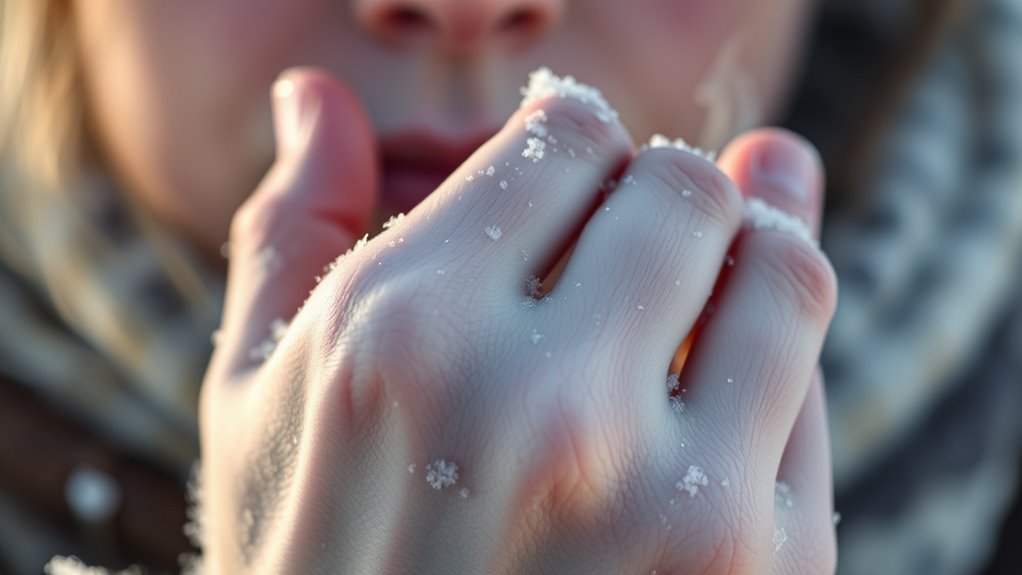
Cold temperatures prompt the body’s vascular system to tighten its blood vessels, a response known as vasoconstriction, which helps conserve heat but raises systemic blood pressure and afterload. You’re observing a coordinated response that begins with peripheral sensors detecting a drop in ambient and core temperatures. In your thermoregulation pathways, afferent signals relay to hypothalamic centers, which in turn initiate sympathetic outflow. This cascade constricts cutaneous arterioles and precapillary sphincters, reducing heat loss at the skin surface while preserving core temperature. The immediate effect is a redistribution of blood volume toward central compartments, improving core perfusion at the expense of distal tissues.
Your vascular tone changes are not uniform across the circulation. Large conductance arteries experience modest changes in tone, but arterioles—particularly in the skin, extremities, and working muscle beds—exhibit the most pronounced vasoconstriction. This regional heterogeneity reflects differential receptor expression and local metabolic cues. Noradrenergic signaling via alpha-adrenergic receptors dominates the acute response, while endothelial-derived factors modulate magnitude through nitric oxide suppression and endothelin-1 upregulation. The net result is elevated systemic vascular resistance, which elevates arterial pressure to sustain cerebral and myocardial perfusion despite peripheral cooling.
Cold induced vasoconstriction interacts with other thermoregulatory processes. Shivering, when present, increases metabolic heat production, potentially counteracting some peripheral cooling. Nonshivering mechanisms adjust brown adipose tissue activity in humans to generate heat, though this pathway is less prominent in adults and varies with age and acclimatization. You may also experience reduced venous return from peripheral vasoconstriction, which can influence cardiac preload and, in susceptible individuals, precipitate or exacerbate hypertension. Baroreflex sensitivity adjusts to these shifts, maintaining cardiac output within a functional range but sometimes at the cost of short-term variability in blood pressure.
Chronic or repeated cold exposure can induce adaptive changes in thermoregulation pathways. Individuals with favorable acclimatization may exhibit attenuated vasoconstrictor responses and improved cutaneous blood flow during rewarming. Conversely, older adults or those with vascular disease may experience exaggerated or prolonged vasoconstriction, increasing the risk of ischemic events in the digits and other vulnerable vascular beds. Your interpretation of these responses should consider ambient temperature, duration of exposure, activity level, hydration status, and comorbidities. Accurate assessment relies on integrating peripheral vascular tone measurements, core temperature trends, and hemodynamic monitoring to distinguish normal cold-induced adjustments from pathologic responses that warrant intervention. Continuous evaluation informs strategies for prevention, such as gradual acclimatization, appropriate protective clothing, and controlled rewarming, balancing thermoregulation efficiency with cardiovascular safety.
Common Questions
Can Cold Weather Affect Blood Pressure in Healthy People?
Yes, cold weather can raise your blood pressure even if you’re healthy. Think of your arteries as springy channels: when cold induces vasoconstriction, they narrow, increasing resistance and altering blood pressure dynamics. You might notice modest bumps, especially with activity or after extended exposure. While most healthy people tolerate this well, sustained cold or extreme exposure can elevate risk in those with underlying hypertension. Monitor symptoms, stay warm, and consult a clinician if readings trend higher.
Do Blood Vessels Constrict Differently in Men vs. Women?
Yes, blood vessels can constrict differently between sexes. You may note that men physiology and women physiology show variations in sympathetic reflexes, endothelial function, and hormonal modulation that influence vasoconstriction magnitude and timing. In cold conditions, men often exhibit greater peripheral vasoconstriction, while women may rely more on estrogen-mediated vasodilation offsets. Overall, sex-specific patterns exist, but individual variability is substantial, so you should consider both biological sex and context when evaluating vascular responses.
Can Cold Exposure Risk Worsen Existing Heart Conditions?
Cold exposure risk can worsen existing heart conditions. You may experience increased blood pressure, heightened cardiac workload, and potential arrhythmias due to sympathetic activation and vasoconstriction. In individuals with coronary artery disease or heart failure, these stresses elevate ischemia risk and may trigger symptoms. If you have a heart condition, avoid prolonged or intense cold exposure, monitor symptoms, and consult your clinician about safe limits, protective clothing, and gradual acclimatization.
How Long Does It Take for Vessels to Adapt to Cold?
Experts say: how long for vessels to adapt to cold varies, but you often notice initial changes within days and partial stabilization over 2–3 weeks. In you, peripheral vasoconstriction can peak quickly and then attenuate as local factors adjust. A notable statistic: cold exposure can increase vascular tone transiently by ~20–40% in unacclimated individuals. How long adaptation timing takes depends on exposure pattern, baseline health, and repeated sessions, shaping your individual trajectory.
Do Medications Influence Vascular Response to Cold?
Yes, medications can influence your vascular response to cold. Some drugs cause drug induced vasoconstriction or interact with autonomic pathways, altering peripheral blood flow. You should consider medication interactions that may amplify vasoconstrictive effects in cold environments, such as decongestants, stimulants, or vasopressors. Always review your regimen for potential interactions and discuss with a clinician if you notice unusual cold sensitivity, worse numbness, or color changes in extremities. Seek medical advice if concerns persist.