
Hydration directly changes your heart workload by modulating blood volume, venous return, and arterial resistance. When fluids are adequate, preload rises, stroke volume improves, and heart rate stays steadier; dehydration raises systemic resistance, increases afterload, and raises myocardial oxygen demand. Warmer or strenuous activity accelerates fluid loss, accelerating tachycardia and fatigue. Maintaining balanced hydration supports stable right atrial pressures and efficient cardiac output, with personalized targets for health conditions—a key factor you can optimize as you plan your next exercise or recovery strategy.
Key Points
- Adequate fluids increase blood volume, improving venous return and stroke volume at rest and during activity, easing heart workload.
- Dehydration raises systemic vascular resistance, increasing afterload and myocardial oxygen demand.
- Lower blood water raises viscosity, demanding more work from the left ventricle to maintain flow.
- Hydration loss during heat or exercise causes tachycardia and earlier fatigue due to reduced preload.
- Fluid balance interacts with electrolytes, affecting conduction and arrhythmia risk, guiding individualized hydration strategies.
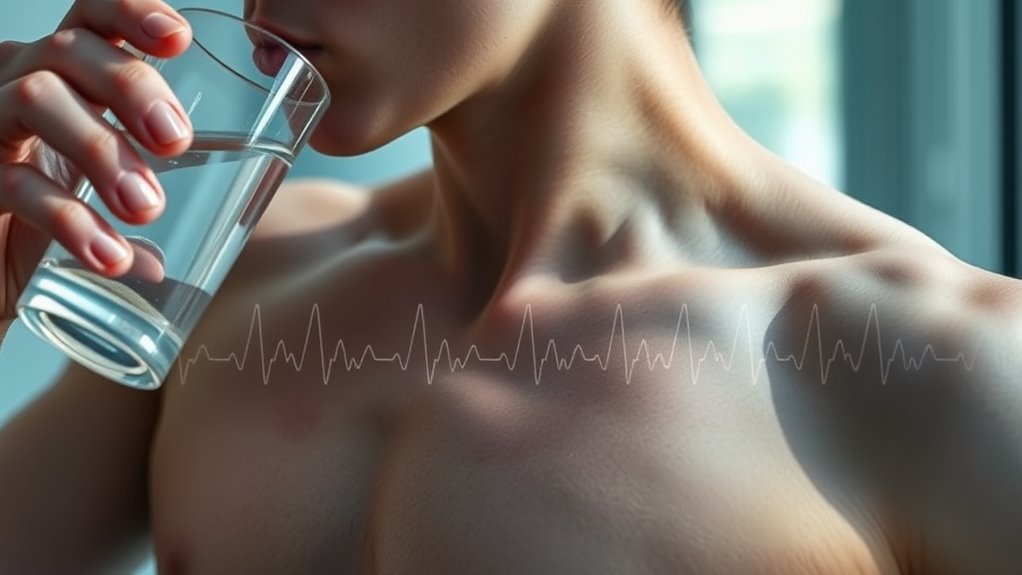
Staying properly hydrated directly affects how hard your heart has to work. When you drink fluids, your blood volume increases, which can improve venous return to the heart. This improves stroke volume at rest and during moderate activity, reducing compensatory heart rate elevations that occur with dehydration. If you’re hypohydrated, your body constricts peripheral vessels to preserve perfusion to vital organs, raising systemic vascular resistance and increasing heart workload. In dehydration, the heart often pumps against a higher afterload, which elevates myocardial oxygen demand and can precipitate exercise intolerance or chest discomfort in susceptible individuals. Hydration status also alters blood viscosity; with lower fluid content, blood becomes thicker, further increasing resistance to flow and imposing additional work on the left ventricle. Conversely, adequate hydration maintains a lower hematocrit and smoother hemodynamics, supporting efficient cardiac output during daily activities.
Staying hydrated eases the heart’s workload by improving preload, reducing afterload, and smoothing blood flow.
You’ll notice that hydration impact depends on body size, environmental conditions, and activity level. In heat or during strenuous exercise, sweat losses can rapidly deplete volume, triggering tachycardia and earlier onset of fatigue as the heart compensates for reduced preload. Maintaining normovolemia helps preserve right atrial filling pressures and stabilizes left ventricular systolic function. In clinical terms, dehydration can lower the cardiac index despite normal or elevated heart rates, reflecting diminished stroke volume rather than simply a faster beat. This nuance matters when you interpret monitoring data, because a normal heart rate doesn’t guarantee adequate myocardial perfusion if preload is insufficient.
Fluid balance also interacts with electrolyte homeostasis, particularly sodium and potassium. Imbalances amplify conduction disturbances and arrhythmic risk, which can increase heart workload indirectly by causing inefficient contractions. You should consider individualized fluid strategies: during prolonged endurance events, small, regular fluid intakes that replace sweat losses help sustain venous return and optimize cardiac efficiency. In short, the hydration impact on heart workload is mediated by preload, afterload, blood viscosity, and vascular tone. When fluids are adequate, your heart operates closer to its resting metabolic efficiency, with lower myocardial oxygen consumption for a given cardiac output.
For clinical assessment, monitor markers of hydration such as body weight trend, urine concentration, and subjective thirst, aligned with vital signs and perceived exertion. If you have cardiovascular disease, diabetes, or kidney impairment, you’ll need tailored hydration targets and ongoing monitoring, since small changes can disproportionately affect heart workload. Practical guidance includes consistent daily fluid intake, attention to heat exposure, and adjusting intake around activity. In sum, maintaining proper hydration minimizes unnecessary cardiac strain, supports stable hemodynamics, and preserves performance and safety across contexts.
Common Questions
How Does Dehydration Affect Blood Viscosity and Flow Resistance?
Dehydration increases blood viscosity and raises flow resistance. When you’re fluid-depleted, your blood becomes thicker, slowing capillary transit and elevating systemic vascular resistance. This dehydration physiology shifts shear stress and can reduce organ perfusion if ongoing. Expect measurable rises in hematocrit and plasma proteins, which compound viscosity. Clinically, you’ll see higher pulse pressure and potential tachycardia as your heart compensates. Rehydration normalizes viscosity and improves venous return, reducing afterload and workload.
Can Hydration Levels Impact Heart Rate Variability During Exercise?
Hydration levels can impact your heart rate variability during exercise. If you’re under-hydrated, you’ll likely see reduced HRV and a higher resting heart rate due to sympathetic dominance. You might think fluids don’t matter, but evidence shows hydration variability alters stroke volume and autonomic balance during activity. So, you’ll optimize hydration strategies to maintain stable exercise heart rate and better autonomic responsiveness, especially during high-intensity intervals where precise data guides performance.
What Minimum Water Intake Supports Healthy Cardiac Preload?
You should aim for a practical baseline of about 2–3 liters per day for most adults, adjusting based on climate, activity, and body size to support preload optimization. For exercise, ensure steady hydration before, during, and after sessions, targeting fluid intake that maintains urine light-colored. Hydration thresholds matter: avoid over- or under-hydration, which can impair preload and cardiac output. Monitor thirst and urine color, and tailor intake to maintain stable preload throughout activity.
Do Electrolyte Imbalances From Hydration Influence Arrhythmia Risk?
Answering yes, electrolyte imbalances from hydration can influence arrhythmia risk. When your electrolyte balance shifts—especially potassium, calcium, and magnesium—you may encounter QT changes or ectopic beats, raising arrhythmia risk. You’ll want to monitor fluid intake and electrolytes with guidance, favoring gradual changes over sudden shifts. This data-driven view highlights that precise hydration and electrolyte management supports stable cardiac electrical activity and lowers potential rhythm disturbances.
Is Overhydration More Dangerous Than Mild Dehydration for the Heart?
Overhydration can be more dangerous for the heart than mild dehydration, especially when it leads to hyponatremia and volume overload. You should recognize overhydration risks like edema and arrhythmia; dehydration thresholds, meanwhile, prompt tachycardia and reduced stroke volume. In practice, monitor urine color, weight changes, and symptoms. If you’re exercising or ill, adhere to evidence-based fluid goals and seek prompt evaluation if confusion, seizures, or chest discomfort occur.