
Does the idea that berries can boost your vascular flexibility hold up under scrutiny, or is it just a promising correlation? You’ll explore how polyphenols like anthocyanins and quercetin may improve endothelial function and nitric oxide availability, while metabolites reach vessels after absorption. The evidence suggests synergy among berry compounds supports redox balance and vascular signaling, but the full impact depends on dose, bioavailability, and overall diet. You’ll want to weigh these factors as you consider incorporating berries into a balanced pattern.
Key Points
- Berry polyphenols, including anthocyanins and quercetin, improve endothelial function and vascular flexibility by supporting nitric oxide signaling.
- Polyphenols reduce oxidative stress in vessels, helping maintain nitric oxide availability for healthier vasodilation.
- Metabolites from berry polyphenols reach endothelial cells and exert direct, beneficial effects on vascular signaling.
- Synergistic interactions among multiple berry polyphenols enhance redox balance and sustain nitric oxide pathways.
- Regular berry intake, as part of a balanced diet, yields sustained improvements in vascular measures and arterial flexibility.
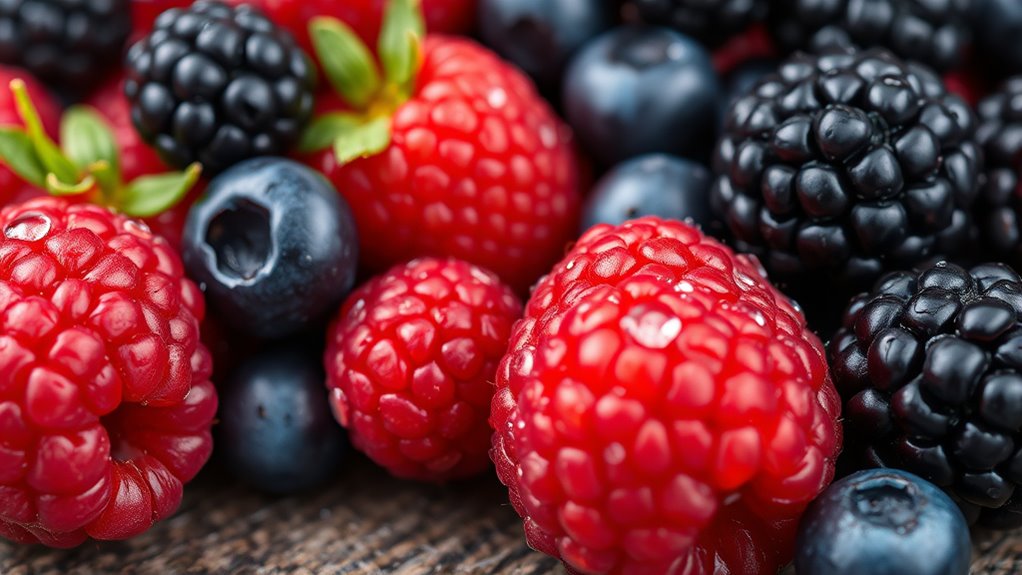
Berries, rich in polyphenols like anthocyanins and flavonols, support vascular flexibility by improving endothelial function and reducing oxidative stress. When you eat these fruits, you activate a cascade of cellular responses that enhance nitric oxide bioavailability, stabilize endothelial nitric oxide synthase, and mitigate inflammatory signaling. This combination lowers vascular tone variability, supporting steadier blood flow during activity and rest. In controlled studies, participants consuming berry-rich diets show improved flow-mediated dilation, a functional measure of endothelial health, with effects that persist as part of a broader diet pattern. You’re not just ingesting antioxidants; you’re supplying compounds that interact with vascular cells, immune cells, and circulating lipids to sustain endothelial resilience over time.
Berries boost endothelial health and steady blood flow through polyphenol-driven nitric oxide support.
You’ll encounter a complex mix of bioactives rather than a single nutrient driving benefit. Anthocyanins, quercetin, ellagitannins, and other polyphenols participate in berry metabolism through absorption, phase II detoxification, and microbial transformation in the gut. These processes influence systemic antioxidant capacity and modulate signaling pathways related to oxidative stress, inflammation, and vascular remodeling. Evidence suggests that polyphenol-derived metabolites can reach the vasculature and exert direct effects on endothelial cells, supporting vasodilatory responses and reducing oxidative damage at the cellular level. The net result is greater vascular flexibility, particularly in populations at risk for impaired endothelial function, such as older adults or individuals with metabolic syndrome.
You’ll also learn that the benefits extend beyond isolated nutrients. Antioxidant synergy occurs when multiple polyphenols and their metabolites interact to produce more robust effects on redox balance and endothelial signaling than any single compound alone. This synergy helps dampen reactive oxygen species while sustaining nitric oxide signaling, a key driver of vessel dilation and responsiveness to physical stress. In parallel, berry metabolism influences lipid handling and inflammatory mediators that can affect arterial stiffness. By supporting mitochondrial efficiency in vascular tissues and modulating adipokine profiles, berries contribute to a more favorable vascular milieu under varying hemodynamic conditions.
Those effects are reinforced by long-term dietary patterns. Regular berry intake, within a balanced diet rich in fruits, vegetables, whole grains, and healthy fats, aligns with clinically meaningful improvements in vascular measures and blood pressure control. While acute studies show immediate endothelial responses after berry consumption, sustained benefits emerge with consistent, repeated exposure. You don’t need to rely on a single berry type; diverse berries provide complementary polyphenols that expand antioxidant synergy and broaden berry metabolism pathways, supporting durable vascular flexibility as part of a healthy lifestyle.
Common Questions
Do Berries Affect Blood Pressure Directly?
Berries can affect blood pressure, but not in a solo, dramatic way. They may have a direct impact by delivering polyphenols and potassium that support vascular function and modestly lower systolic pressure in some folks. You’ll likely notice gradual shifts rather than instant changes. Evidence suggests benefits are plausible but small and context‑dependent, unlike meds. So, yes—berries can influence blood pressure indirectly, especially as part of an overall healthy diet.
Which Berry Types Are Best for Veins?
You’ll benefit most from berries like blueberries and strawberries, which support veins through berries composition and polyphenols intake that promote vascular health. To maximize vessel elasticity, choose a variety to boost polyphenols intake while maintaining overall fruit balance. Regular consumption appears to support vascular health by improving endothelial function and reducing oxidative stress. Aim for a daily mix to optimize berries composition and maintain vessel elasticity as part of a heart‑healthy lifestyle.
How Many Servings Daily Are Optimal?
Optimal daily quantity varies, but you’ll often see 1–2 cups (about 150–300 grams) as a practical guideline, depending on your overall diet. You should aim for optimum servings most days, not every meal. Start with one serving and adjust based on blood sugar, calories, and tolerance. You’ll notice a gradual vascular benefit as antioxidants and polyphenols accumulate. If you’re high-risk, consult your clinician for personalized daily quantity targets.
Do Frozen Berries Retain Vascular Benefits?
Frozen berries retain most vascular benefits if chosen in reasonable portions and stored properly, though texture and antioxidant levels may decline slightly with time. You’ll still get the polyphenols and vitamin C that support endothelial function, especially when eaten soon after purchase or flash-frozen at harvest. For consistent vascular benefits, aim for a mix of frozen berries as part of a balanced diet, rather than relying on them alone.
Are Berry Extracts as Effective as Whole Berries?
You’ll want precision: berry extracts can match many benefits of whole berries, but not universally. In an evidence-based view, extraction concentrates polyphenols and flavonoids, aiding vascular function, yet whole berries offer fiber, matrix effects, and synergistic compounds that extracts may miss. So, berry extraction can be effective, but performance varies by method and berry type; a whole berry comparison often reveals broader benefits. For best vascular flexibility, consider both, with emphasis on diverse, regular intake.