
Micro-movements like ankle circles, pumps, or shoulder rolls activate the skeletal-muscle pump, boosting venous return and arterial flow during long sits. By moving slowly and in sync with breath, you create a stable cadence that supports neutral posture, distributes load, and improves capillary perfusion with minimal time or equipment. These brief, repeatable patterns can reduce edema and fatigue, but their impact hinges on consistency—so there’s more to explore and apply.
Key Points
- Micro-movements are small, intentional actions that boost circulation during prolonged sitting by engaging calf and thigh muscles.
- Ankle circles, pumps, and shoulder rolls act as micro-exercises to enhance venous return and arterial flow.
- Slow, controlled movements paired with breathing cues optimize the skeletal-muscle pump and capillary perfusion.
- Neutral posture and regular cadences (e.g., 1 minute every 15 minutes) support load distribution and edema prevention.
- A practical, tool-free regimen improves edema risk, heaviness, and range of motion, with customization for tolerance and medical guidance.
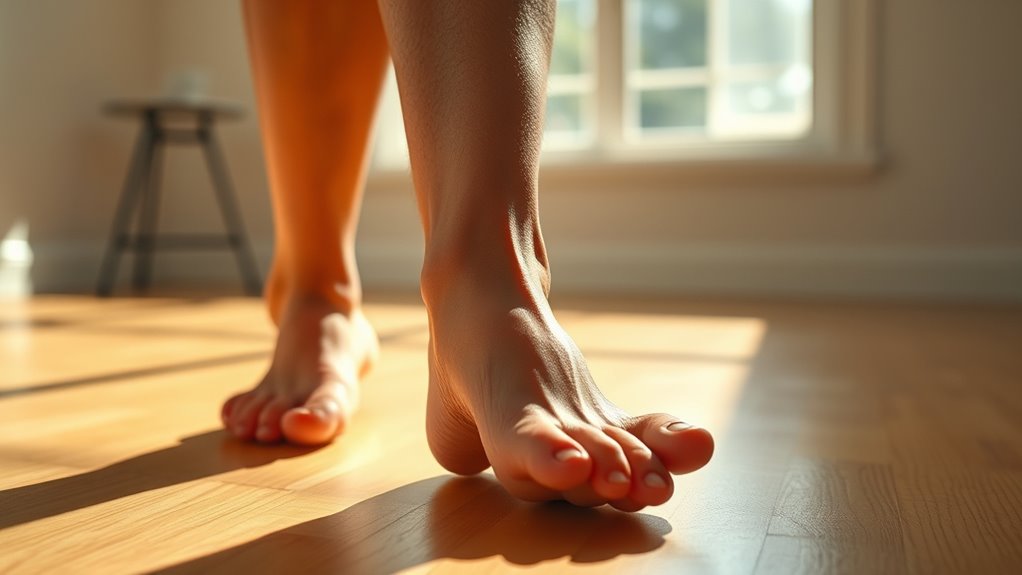
Micro-movements—small, intentional movements like ankle circles, ankle pumps, or shoulder rolls—are simple, practical strategies that can enhance circulation, especially when sitting for long periods. You’ll notice these subtle actions can act as micro-exercises that engage calf and thigh muscles, promoting venous return and aiding arterial flow to the limbs. The idea isn’t to replace formal exercise but to integrate movement strategies into sustained positions, reducing stasis that can contribute to swelling, discomfort, or fatigue. Evidence supports that even brief, repetitive movements activate the skeletal-muscle pump, improving documented circulation benefits without requiring extra time or equipment. You can start with a few minutes if you’re desk-bound, then progressively increase duration as tolerance and comfort permit.
When you perform ankle circles, consider slow, controlled rotations in both directions to engage the ankle joint complex without provoking strain. Ankle pumps, done with deliberate plantarflexion and dorsiflexion, stimulate the calf muscles, enhancing venous return from the lower extremities. Shoulder rolls address upper-body stiffness and encourage thoracic mobility, which can influence respiratory efficiency and overall circulatory dynamics. The cumulative effect of these micro-downsized movements is a measurable uptick in venous velocity and improved capillary perfusion in accessible regions. In practice, you can pair movements with breathing cues, exhaling during the effort phase and inhaling gently during relaxation, to synchronize autonomic and musculoskeletal systems.
From a clinical perspective, your posture and load distribution matter. Sit with a neutral spine, hips slightly above knee height, and feet flat or supported. If your legs tend to lock or you notice swelling, set a regular cadence—for example, one minute of ankle pumps every 15 minutes—and track symptoms. Movement strategies like these can mitigate edema risk, reduce subjective heaviness, and preserve range of motion. They also support microcirculatory flow, which, although subtle, contributes to tissue oxygenation and nutrient delivery in engaged muscles and adjacent tissues. You don’t need specialized tools; just awareness and consistency drive benefits.
If you’re managing chronic conditions that affect circulation, such as venous insufficiency or edema, discuss a tailored plan with your clinician. The goal is to establish a safe, feasible routine that remains integrated into daily life. You might start with two to three sets of 60 seconds for each movement pattern and adapt based on tolerance and response. Tracking symptoms like swelling, warmth, or stiffness can help determine if you should adjust frequency or intensity. In sum, these simple, evidence-informed movement strategies offer practical, patient-centered means to improve circulation benefits while supporting comfort during prolonged sitting.
Common Questions
Do Micro-Movements Replace Regular Exercise?
No. Micro movements don’t replace regular exercise. They can complement activity and help with circulation, but they have limitations. For most people, exercise substitution validity isn’t supported as a sole strategy; gradual, progressive activity yields broader benefits. If mobility is restricted, micro movement strategies may bridge gaps, yet you should still aim for aerobic and resistance components as tolerated. Discuss micro movement limitations with your clinician to tailor a feasible plan.
How Long Should Micro-Movements Be Done Daily?
Short answer: micro movement duration can be as little as a few minutes total per day, and you’ll still gain benefits when done consistently. Your daily practice frequency matters more than chasing long sessions. Irony aside, avoid overdoing; spread 5–10 minutes into several short bouts. Evidence-based tip: aim for regular micro movements across the day, not a single long session. Track progress, adjust as tolerated, and maintain precise, patient-centered care.
Can Micro-Movements Help With Varicose Veins?
Yes, micro movements can help with varicose vein relief by gently improving circulation and reducing venous pooling. You’ll benefit from circulation boosting micro movements performed regularly, especially while standing or sitting for long periods. These tiny actions may reduce swelling and discomfort when done consistently. Remember, they’re adjuncts, not cures—for persistent varicosities or skin changes, consult your clinician. Use them as part of an overall plan for healthier blood flow and circulation.
Are There Risks or Contraindications for Micro-Movements?
Imagine a safety net catching you—that’s the idea behind micro-movements. There are risks overview and contraindication flags to watch. You may experience temporary discomfort, swelling, or skin irritation, especially if you have fragile skin or acute injury. In certain conditions, such as active DVT, infection, or severe edema, these movements aren’t advised. Always consult your clinician for personalized guidance; this isn’t a substitute for medical evaluation, and follow professional recommendations closely.
Do Micro-Movements Affect Blood Pressure Readings?
Micro movements can cause small, transient fluctuations in blood pressure readings, but they don’t fundamentally change long-term blood pressure control. If you position yourself or perform movements during measurement, readings may appear slightly higher or lower due to posture, cuff placement, or smooth muscle activity. To minimize variability, rest quietly for several minutes, sit with back supported, feet uncrossed, and use the same arm. When in doubt, repeat measurements and discuss patterns with your clinician.