
Breathing slowly is like a calm tide smoothing rough shorelines inside you. You shift autonomic balance toward parasympathetic dominance, dampening the surge of sympathetic arousal. Over minutes and days, you’ll stabilize heart rate and blood pressure, boost vagal tone, and sharpen prefrontal control while reducing amygdala reactivity. The result isn’t just calmer moments—it’s enduring flexibility that may lower cortisol and quicken your return to baseline when stress spikes, inviting you to explore what’s possible next.
Key Points
- Slow breathing increases parasympathetic activity and dampens sympathetic arousal, reducing stress hormone release over minutes.
- It stabilizes cardiovascular variability and produces steadier heart rate and blood pressure under stress.
- Enhanced vagal tone from longer exhalations improves cortical regulation, lowering amygdala reactivity during challenging tasks.
- A breathing cadence around six breaths per minute, with longer exhalations, strengthens autonomic regulation and neural control networks.
- Regular practice yields lasting autonomic balance, quicker recovery after perturbations, and lower cortisol responses to acute stress.
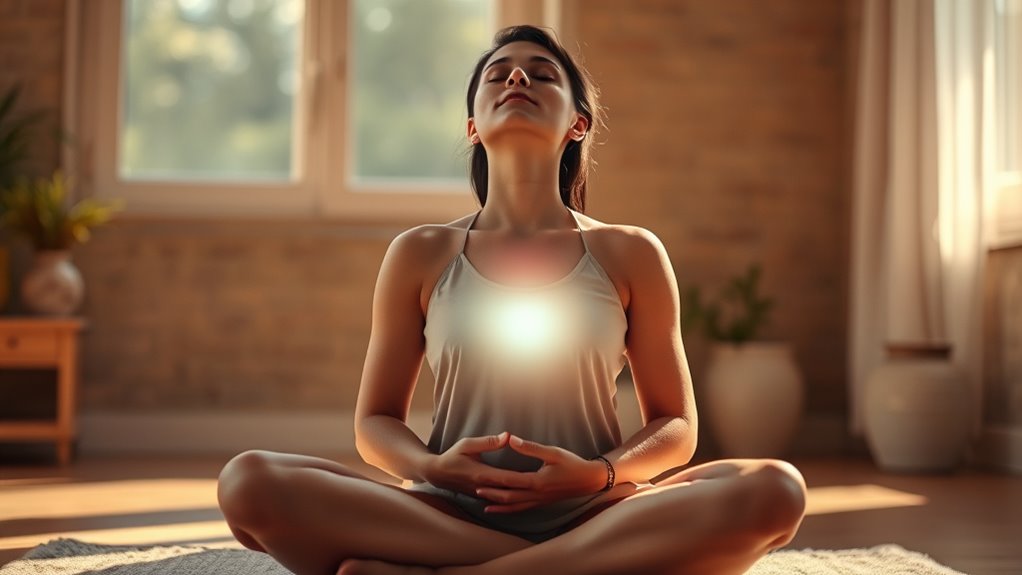
Slow breathing isn’t just a calming ritual; it actively reshapes how your body responds to stress. When you slow your breathing rate, you influence patterns of autonomic activity that govern heart rate, blood pressure, and hormonal release. This isn’t mysticism—it’s measurable, reproducible physiology. You enter a state where the parasympathetic branch gains influence, while sympathetic arousal is tempered. Over minutes, this shift can reduce the frequency and magnitude of stress markers, creating a tighter coupling between cognitive appraisal and bodily response. The mechanism hinges on baroreflex engagement, where slower, deeper inhalations and exhalations improve arterial stretch sensitivity, stabilizing cardiovascular variability. In practice, you may notice steadier heartbeats and more predictable blood pressure trajectories during stress tasks.
Slow breathing reshapes stress responses, boosting parasympathetic influence and stabilizing heart rate and blood pressure.
From this vantage, mindful physiology becomes your toolkit. Rather than chasing vague calm, you observe how breathing pattern translates to physiological state. You’re not simply “inhaling peace”—you’re modulating neural circuits that link sensory input, emotional appraisal, and autonomic output. This precision matters: small changes in breath duration, depth, or cadence produce disproportionate effects on vagal tone and cortical regulation. When you sustain a slow breathing tempo around six breaths per minute, you create a resonance with heart rate variability that signals safety to the brain. That signaling can dampen amygdala reactivity and enhance prefrontal control during challenging tasks.
Autonomic balance emerges as a tangible target, not a vague ideal. You shift toward a state where autonomic flexibility is preserved, enabling rapid reallocation of resources when stressors appear. In experimental contexts, participants practicing regular slow breathing show lower cortisol responses to acute stress and improved performance consistency. You may also experience improved emotional clarity: reduced reactivity, quicker recovery, and a more measured interpretation of threat cues. This isn’t universal magic, but it aligns with robust data linking breathing rhythms to autonomic regulation and cognitive control networks.
To apply this insight, you structure breathable cycles that are explicit rather than optional. Your goal is a cadence that supports exhalation-driven vagal activation: a controlled inhale for a count of three to five, followed by a longer exhale—often five to seven counts. You repeat for several minutes, aiming for tactile feedback in the chest and abdomen that confirms depth without strain. Over days and weeks, consistency yields enduring changes in baseline autonomic balance, translating to greater steadiness in daily stress, sharper focus under pressure, and quicker return to homeostasis after perturbations.
Common Questions
Can Slow Breathing Help With Chronic Pain Management?
Slow breathing can help with chronic pain by activating the parasympathetic system and reducing muscle tension, which may lower perceived intensity. Evidence suggests paced breathing improves mood, anxiety, and pain modulation modestly, especially when combined with mindfulness or cognitive strategies. You may notice reductions in resting heart rate and sympathetic arousal, supporting better coping. However, effects vary, and slow breathing isn’t a standalone cure; use it as part of a multimodal plan with medical guidance. Regular practice matters.
How Soon Do Benefits Appear After Starting Practice?
You may notice early benefits within days to weeks of consistent practice, though timelines vary. With regular slow breathing, you can expect rapid nervous system changes as parasympathetic activity increases and sympathetic arousal decreases. By the second week, improvements in heart rate variability and subjective calm commonly emerge. Early benefits often precede measurable changes in stress reactivity, but sustained practice is needed for meaningful, longer-term adaptations.
Is Slow Breathing Effective for Children and Teens?
Slow breathing can be helpful for children and teens, though effects vary by age, baseline anxiety, and practice consistency. You’ll want caregiver-friendly, school-based programs that are structured, developmentally appropriate, and supervised. Evidence suggests benefits for autonomic regulation and mood in youths when techniques are adapted for kids, with ongoing support from caregivers and educators. Prioritize gradual exposure, clear instructions, and easy-to-use routines to maximize engagement and minimize frustration across home and school settings.
Are There Risks or Contraindications to Slow Breathing?
Yes, there are risks and contraindications to slow breathing. You should be cautious if you have severe dizziness, fainting, or unmanaged cardiovascular or pulmonary conditions, pregnancy with certain complications, or recent surgery. Safety considerations include starting slowly, using gentle diaphragmatic breaths, and avoiding hyperventilation. If you experience chest pain, worsening anxiety, or shortness of breath, stop and seek clinician guidance. In youths or meds affecting respiration, consult a professional to tailor pace and duration.
How Does Breathing Pace Compare to Meditation for Stress?
Breathing pace can yield rapid, noticeable stress relief, but meditation comparison often provides more durable benefits. You’ll usually see faster autonomic shifts with deliberate breathing pace, yet meditation combines attention, expectancy, and interoception, producing broader regulatory gains. If you want quick calm, pacing your breaths to 4–6 seconds can work. For lasting resilience, aim for regular meditation practice alongside breathing pace variations. In short, breathing pace offers speed; meditation comparison tends toward enduring stress-system recalibration.