
You probably don’t realize how much outdoor scenes can reset your nervous system without you noticing. As you walk, your senses take in trees, water, and sky, lowering rumination and subtle stress markers. You’ll pace your breath with your steps, keeping attention grounded rather than worrying, which builds a calmer baseline over time. It’s a simple, regular habit that fits into daily life, quietly shaping how you respond when challenges arise—if you choose to try it.
Key Points
- Outdoor walking reduces rumination and lowers physiological stress markers, promoting a calmer mood.
- Natural environments provide quieter light and expansiveness that support better attention regulation.
- Mindful pacing of gait and breath during walks helps dismantle automatic stress responses.
- Daily or near-daily outdoor time builds a calmer baseline and improves emotional regulation.
- Safe, simple outdoor routines can be integrated into daily life, reinforcing consistency and long-term calm.
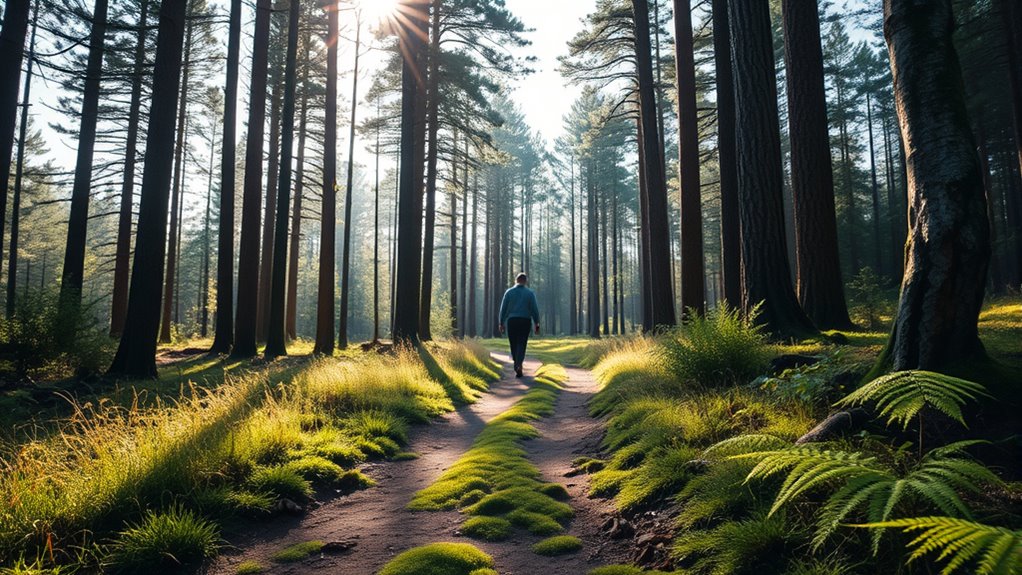
Walking outdoors can noticeably calm your mind, and the effect is supported by research and everyday experience. When you step outside, you’re inviting a set of routine, measurable changes that can reduce tension and enhance focus. Your brain benefits from gentle sensory input, and your body relaxes as you breathe more deeply and steadily. You don’t need a long hike to feel the impact; even short, consistent exposure can build a calmer baseline over days and weeks.
Walking outdoors quiets the mind with simple, steady breaths and gentle sensory input.
A core mechanism is nature exposure. Being in natural environments reduces rumination and lowers physiological stress markers. You may notice quieter surroundings, softer light, and a sense of expansiveness that counteracts the usual pace of daily life. This doesn’t require you to become a nature buff; it simply means you let your senses register what’s around you—colors, textures, sounds—and let your nervous system recalibrate, moment by moment. In practical terms, you get more reliable mood stability and better attention regulation after regular outdoor time.
Mindful pacing is another practical cornerstone. You don’t need to force a fast walk or chase a particular distance. Instead, you tune into your gait, cadence, and breath. If you’re anxious, you might lengthen your breaths to a slow, comfortable count and notice how your steps align with your inhalations and exhalations. If your mind wanders, gently guide it back to the sensation of your feet touching the ground, the air on your skin, or the rhythm of your breath. This intentional, nonjudgmental attention helps dismantle automatic stress responses and reinforces a calmer state.
Consistency matters. Daily or near-daily outdoor time creates a buffer against daily stressors, improving overall emotional regulation. You don’t need perfect weather or a dramatic setting; visual variety—trees, water, sky—augments perceptual richness without demanding exertion. Even a brief walk around your neighborhood can offer meaningful benefits when done with mindful pacing and regularity. If you can, couple outdoor time with a light routine, such as a 10-minute stroll after meals, to establish a predictable calm-inducing pattern.
Be practical in planning. Safe, accessible routes support adherence. You can pair walking with a simple purpose—grocery retrieval, phone call, or clearing your head before a meeting—so the activity integrates into your day rather than competing with it. If motivation wanes, lower the barrier: step outside for five minutes, notice one thing you hadn’t seen before, and then decide if you want more. Over time, the cumulative effect of mindful pacing and consistent nature exposure tends to reduce irritability, sharpen focus, and enhance your sense of control.
Common Questions
How Long Should a Typical Outdoor Walk Last for Calmness?
A recent study found that even 10 minutes outdoors can reduce stress markers, so a walk of about 15 to 30 minutes works well for calmness. You should tailor the time duration to how you feel, not a rigid rule. Your pace choice matters too: a gentle, conversational stroll supports relaxation, while brisk tempo can boost mood after a rough day. If you’re pressed for time, start with 10 minutes and build up.
Do Scents From Nature Affect Mood During Walks?
Yes, scents from nature can influence mood during walks. You might notice calmer feelings when you’re surrounded by fresh pine, damp earth, or blooming flowers. The nature fragrance impact, plus broader sensory input, can reduce stress hormones and boost positive affect. While effects vary, you’ll likely feel more relaxed and centered when you breathe naturally among green spaces, making your walk feel more restorative and emotionally balanced.
Is Mind-Wandering During Walking Beneficial or Distracting?
Mind wandering during walking can be beneficial in moderation, offering creative processing and problem-solving, but it can also become distracting if attention drifts too far from your steps. Aim for a distraction balance: allow occasional, purposeful mind wandering, then gently bring focus back to rhythm, breath, or surroundings. This approach aligns with evidence on cognitive flexibility and mood regulation, helping you stay calm while still reaping mindfulness and clarity benefits.
Can Walking Outdoors Replace Meditation for Calmness?
Walking outdoors can help, but it isn’t a complete replacement for meditation. You can gain calmness by combining mindful breathing and sensory awareness during walks, yet formal practice often deepens effortful quiet and focus. Use outdoor time as a bridge: notice breath, tune into sounds, textures, and sights. If you’re short on time, brief mindful breathing sessions still offer measurable benefits. Consistency matters more than duration for sustaining calmness.
Do Earbuds or Music Interfere With Outdoor Calmness?
Earbuds or music can affect outdoor calmness. Listening distractions may help some people focus, but they can also dull awareness of surroundings and reduce mood benefits. In nature sounds vs silence, ambient sounds often support relaxation, yet headphones can mask birdsong or wind cues that reinforce calm. If you use earbuds, keep volume low, choose gentle tracks, and pause if you feel overstimulated or unsafe. Tailor your approach to your sensitivity and environment.