
Ever since scientists started spotlighting phospholipid-bound omega-3s, krill oil has looked more promising than standard fish oil. You’ll meet experts’ top picks that pair EPA/DHA with phospholipids and astaxanthin for better absorption and stability. Think Antarctic-sourced krill, clean labels, third-party testing, and transparent sourcing. Curious how these factors translate into real benefits and clearer choices? Let’s look at the three strongest options and what sets them apart.
Key Points
- Choose products with phospholipid-bound omega-3s for better absorption and stability, aided by natural astaxanthin as an antioxidant.
- Prioritize Antarctic krill sourcing with third-party certifications (MSC, non-GMO, gluten-free) and transparent sustainability details.
- Look for clear serving information and potency per serving to compare actual omega-3 content accurately.
- Favor brands with long heritage, cGMP manufacturing, and third-party heavy metals testing for reliability.
- Consider added ingredients like choline for cognitive support, ensuring they truly enhance value without unnecessary additives.
Bronson Antarctic Krill Oil 1000 mg with Omega-3s EPA, DHA, Astaxanthin and Phospholipids 120 Softgels
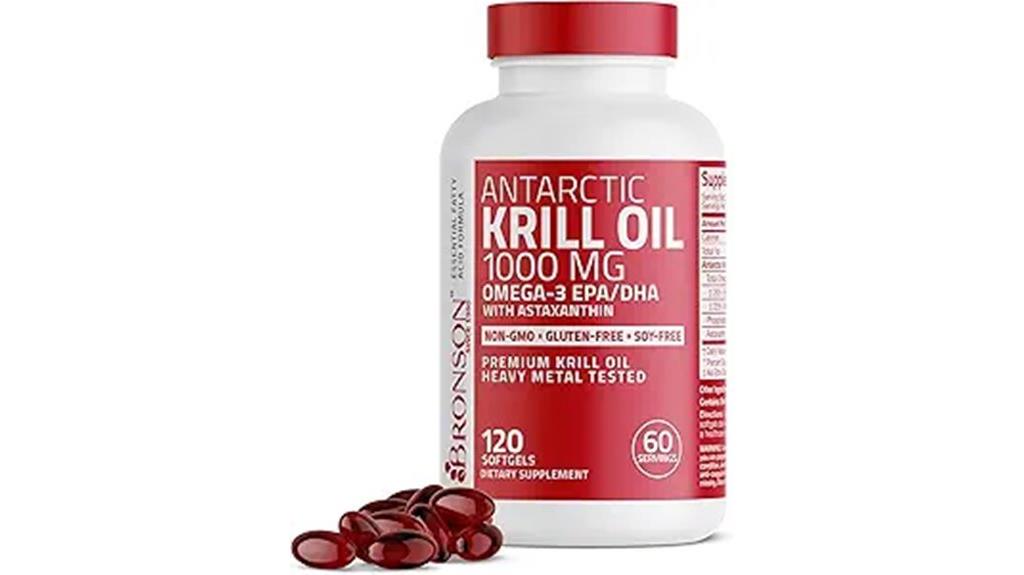
If you want a krill oil that combines high potency with natural antioxidants, Bronson Antarctic Krill Oil 1000 mg stands out: each serving delivers 1000 mg of krill oil with EPA, DHA, natural astaxanthin, and phospholipids, plus 120 softgels per bottle for a solid, time-tested supply. You get 1000 mg per serving (two softgels), along with omega-3s and phospholipids, and a source of natural astaxanthin. The product is heavy metal tested, GMO-free, gluten-free, soy-free, and bottled in a New York cGMP facility. Its Antarctic krill origin supports clean sourcing, backed by Bronson’s heritage since 1960.
Best For: Individuals seeking a high-potency krill oil with natural antioxidants and clean sourcing, including EPA/DHA, astaxanthin, and phospholipids, in a time-tested brand.
Pros:
- High potency 1000 mg per serving with EPA/DHA and natural astaxanthin
- Contains phospholipids for potentially improved absorption
- Clean label: heavy metal tested, GMO-free, gluten-free, soy-free; bottled in a New York cGMP facility
Cons:
- 2 softgels per serving may be a larger intake for some users
- Antarctic krill oil may be more expensive than some fish oil options
- Availability depends on supply of Antarctic krill and brand distribution
MegaRed Ultra Strength Omega-3 Krill Oil Supplement (60 Softgels)
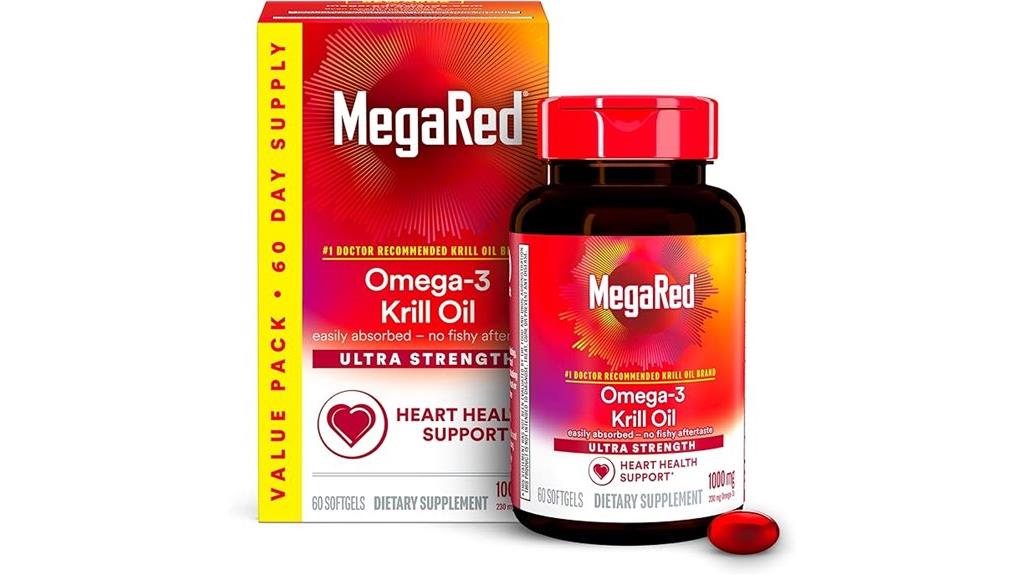
Looking for a high-strength krill oil that’s easy on digestion and doesn’t leave a fishy aftertaste? MegaRed Ultra Strength delivers 1000 mg per softgel, pairing EPA/DHA with astaxanthin and phospholipids for better absorption. Sourced from Antarctic krill, it’s sustainable and ships in a 60-softgel bottle. With twice the omega-3 content of standard krill oil, this formula boosts omega-3 index and supports heart health when taken once daily. There’s no fishy odor or aftertaste, thanks to the krill oil’s phospholipid carrier. Note: statements aren’t FDA-approved; product isn’t a disease treatment.
Best For: Individuals seeking a high-strength krill oil with easy digestion, no fishy aftertaste, and heart-health support.
Pros:
- High 1000 mg per softgel delivers more omega-3 content per dose
- Phospholipid carrier and astaxanthin may enhance absorption and antioxidant support
- No fishy aftertaste or odor due to krill oil formulation
Cons:
- May be more expensive per serving than standard krill oil
- Regulatory claims are not FDA-approved and not a cure or treatment
- Only 60 softgels per bottle; may require more frequent repurchase for daily use
Sports Research Omega-3 Krill Oil 500mg Mini Gels (Krill + Choline, Phospholipids & Astaxanthin) 120 Count
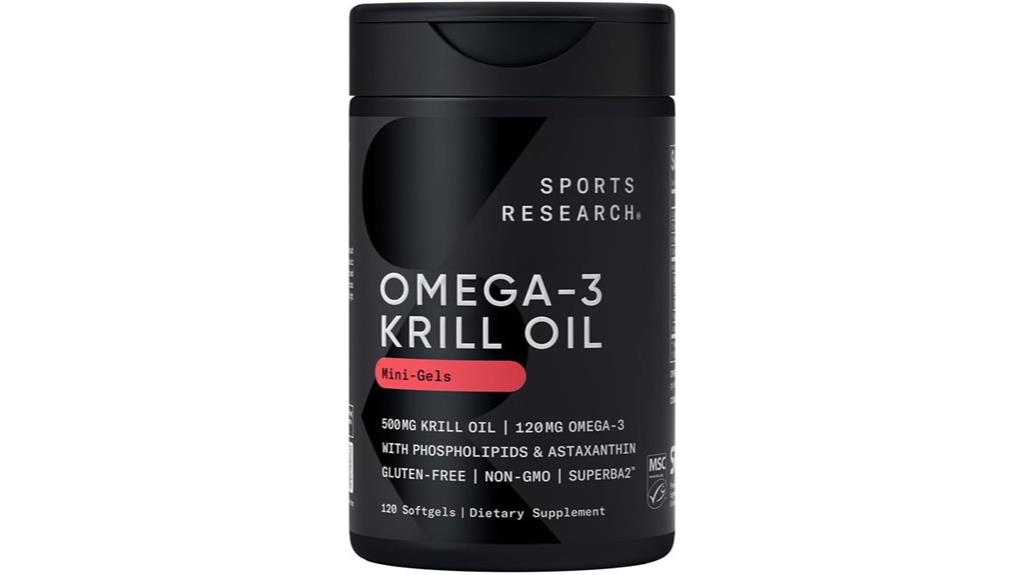
Sports Research Omega-3 Krill Oil 500mg Mini Gels stand out for anyone seeking a high-concentration, easily absorbed krill oil option with added choline and phospholipids. Each mini gel delivers 500mg of Pure Antarctic Krill and roughly 400mg of phospholipid-bound Omega-3s, plus EPA and DHA. You’ll get elevated astaxanthin and choline to support cellular protection and brain function, with improved bioavailability from phospholipids. No fishy aftertaste here, and the product is MSC certified, gluten free, and non-GMO. Manufactured in a cGMP facility and third-party tested for heavy metals, it’s a clean, sustainable choice.
Best For: those seeking a high-concentration, easily absorbed krill oil with added choline and phospholipids, plus antioxidant support.
Pros:
- High potency: 500 mg pure Antarctic krill oil per mini gel with ~400 mg phospholipid-bound omega-3s, EPA and DHA
- Enhanced absorption: phospholipids improve bioavailability and cellular uptake
- Added protection: elevated astaxanthin and choline support cellular health and brain function; no fishy aftertaste
Cons:
- May be pricier than standard fish oil or lower-dose krill oil options
- Requires daily capsule intake; some users may prefer softgels with fewer capsules per serving
- Availability may vary by retailer or region due to MSC and sustainability sourcing
Factors to Consider When Choosing Omega 3 Krill Oil
When you’re choosing an omega-3 krill oil, start with source and sustainability to ensure responsible harvesting, then check the omega-3 content per serving to compare value. Look at the bioavailability form and verify purity with third-party testing, while noting any added ingredients that support or dilute the product. Prioritize clarity on these factors to pick a formulation that fits your goals and preferences.
Source and Sustainability
Source and sustainability matter when choosing omega-3 krill oil, so you’ll want to verify where the krill comes from, how it’s harvested, and who certifies the practices. Krill oil sources are typically Antarctic krill from Cold Southern Ocean waters, often labeled as abundant and sustainable. Look for third-party certifications or MSC signals to verify responsible harvesting practices. The phospholipid form of omega-3s in krill oil is touted for potentially improved bioavailability compared to triglyceride forms, which may influence your decision. Antarctic krill oil products often emphasize natural astaxanthin as an antioxidant component to protect sensitive fatty acids. Regulatory claims vary; many products state that statements are not FDA-evaluated and focus on heart health or general wellness rather than disease treatment.
Omega-3 Content per Serving
Omega-3 content per serving varies by product, so always check the label for the exact EPA and DHA amounts. Some krill oils show 1000 mg per serving (often two 500 mg softgels), while others list 225 mg of total omega-3s. You’ll see differences: some products emphasize total Omega-3 Fatty Acids per serving, while others specify EPA and DHA separately within that total. Phospholipid-bound omega-3s in krill oil are marketed for potentially enhanced bioavailability compared to triglyceride forms, which can influence your experience even with similar totals. Certain labels claim “2X MORE OMEGA-3” per softgel, changing per-serving totals versus standard krill oil. Always verify the exact per-serving omega-3 content (EPA + DHA) on the label, since formulations and serving sizes differ.
Bioavailability Form
Bioavailability is a key factor when choosing omega-3 krill oil because how much you absorb matters as much as how much you ingest. Phospholipid-bound omega-3s in krill oil are reported to offer improved intestinal absorption and bioavailability compared to triglyceride-form omega-3s, so you may get more EPA and DHA from a given dose. The inclusion of phospholipids helps drive incorporation into cell membranes, potentially boosting tissue utilization. Astaxanthin is often co-present with krill oil and may aid in protecting omega-3s from oxidation, supporting stability. Krill oil formulations that emphasize phospholipid carriers claim easier digestion with reduced fishy aftertaste or burps. Some products specify omega-3 content per softgel as total omega-3s, with a portion bound to phospholipids, impacting the actual bioavailable dose.
Purity and Testing
When shopping for krill oil, purity and testing should be non-negotiables. Look for explicit notes like “heavy metal tested” or third-party testing verification to confirm contaminant controls. Check the source—anthctic harvesting details matter, since cleaner origins can reduce exposure risk. Seek certifications or assurances such as cGMP facility testing or independent lab results to prove strict quality control. Verify the product is free from common allergens or fillers that could affect purity claims, for example gluten-free, non-GMO, and soy-free labels. Consider the formulation’s carrier and active ingredients: a phospholipid carrier or natural astaxanthin can influence bioavailability and perceived purity. Use these indicators together to gauge overall quality, not just marketing claims.
Added Ingredients
Considering added ingredients can clarify a Krill oil’s value beyond core omega-3s. When evaluating formulas, look for natural astaxanthin for antioxidant support and phospholipids to aid omega-3 bioavailability. Some options add choline, which may provide extra cognitive support beyond the core benefits. Phospholipid-bound omega-3s are often highlighted for easier absorption compared to triglyceride forms. Astaxanthin serves as a stabilizer and colorant, contributing to oxidative stability and product longevity. Avoid products with unnecessary additives, artificial colors, flavorings, or fillers that don’t enhance omega-3 krill oil’s core value. Prioritize blends that clearly explain ingredient roles and avoid superfluous additions that could dilute potency or raise cost without improving absorption or stability.
Brand Reputation
Brand reputation matters because it reflects consistent quality, transparency, and long-term reliability. You should favor brands with long-standing heritage, decades of operation, or founder-backed expertise, because that history signals steadiness and proven performance. Look for documented quality assurances like third-party testing for heavy metals and purity, plus certifications such as non-GMO or gluten-free. Prefer companies that clearly disclose sourcing details, for example Antarctic krill, and demonstrate sustainable harvesting practices to ensure responsible sourcing. Favor transparency around omega-3 content per serving and carrier form, such as phospholipid-bound omega-3s, to support absorption. When you encounter health claims, assess them cautiously, favoring brands that acknowledge regulatory limits and back statements with evidence. This combination helps you choose consistently reliable krill oil.
Certification Details
Certifications matter because they verify you’re getting a product that’s truly sustainable, safe, and accurately labeled. When you shop, look for MSC certification to confirm sustainable sourcing of krill oil and adherence to strict environmental standards. Next, verify third-party testing for contaminants like heavy metals to ensure purity and safety. Check that the manufacturing facilities are cGMP-compliant, signaling consistent quality control processes. If you have dietary needs, confirm non-GMO and gluten-free labeling. Finally, review any third-party claims about potency and omega-3 content to ensure the labeled amounts are accurate. These details help you balance efficacy with responsibility, so you can trust what you’re taking and how it’s produced.