
You can support stable cholesterol by choosing natural fats like olive oil and avocados, while limiting saturated fats and avoiding trans fats. Include soluble fiber from oats, beans, and apples, which helps lower LDL, and consider plant sterols found in fortified foods. Aim for regular fatty fish or plant-based sources of omega-3s, and mix in nuts or seeds for heart-friendly fats. Small, steady substitutions add up, and the next step could change how you feel—if you’re curious, you’ll see why.
Key Points
- Choose smart fats: prioritize monounsaturated and polyunsaturated fats from olive oil, avocados, nuts, and seeds to support healthy cholesterol levels.
- Substitute saturated fats with plant-based or fish options several times weekly to gradually improve lipid profiles.
- Include plant sterols daily through fortified spreads or yogurts to reduce intestinal cholesterol absorption.
- Increase soluble fiber from oats, barley, legumes, fruits, and certain vegetables to help lower LDL.
- Eat fatty fish a few times weekly and add plant-based sources like flaxseeds and chia seeds for balanced omega-3 intake.
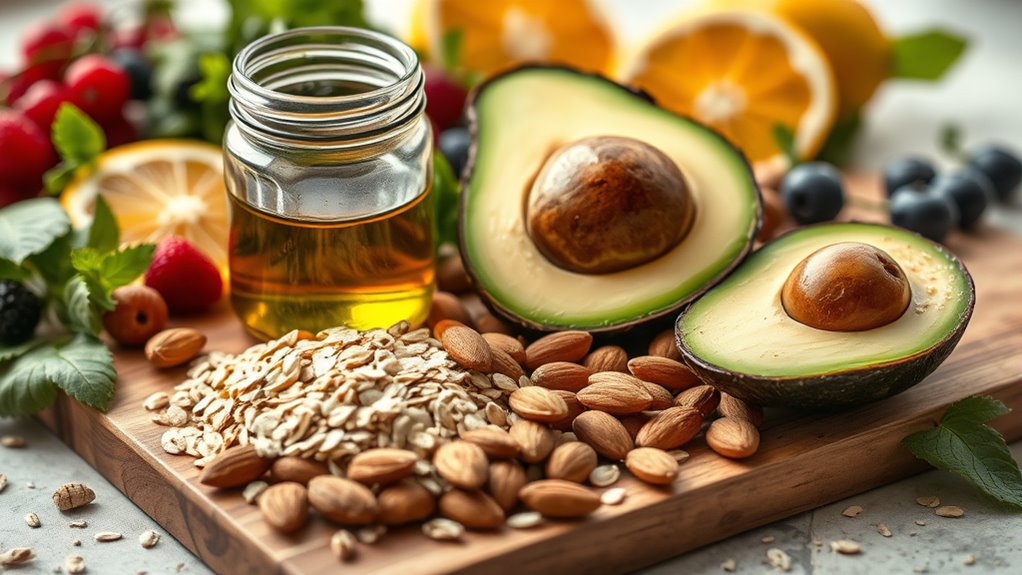
Are natural foods really effective for managing cholesterol levels? You’ll find that small dietary shifts add up, especially when you focus on whole foods, balanced fats, and thoughtful fiber. You’re aiming for steady, sustainable changes, not quick fixes, and the evidence supports real benefits when you pair dietary choices with consistency. The core idea is straightforward: optimize the types of fats you eat, boost plant-based components, and tune your overall nutrient balance to influence LDL and HDL levels over time.
Healthy fats matter. You don’t need to cut fat entirely; you need to choose smart fats. Prioritize monounsaturated and polyunsaturated fats from olive oil, avocados, nuts, and seeds, plus a measured intake of fatty fish. This pattern can help modestly raise HDL while lowering LDL particle oxidation, contributing to improved lipid profiles without sacrificing flavor. Limit saturated fats from red meat and full-fat dairy, and avoid trans fats found in many processed products. If you’re unsure about portions, a practical benchmark is replacing 1–2 high-saturated-fat meals per week with plant-based or fish-based options, then observing your tolerance and energy levels.
Healthy fats matter: swap saturated fats for smart fats from plants and fish.
Plant sterols offer another practical lever. These compounds, naturally present in small amounts in vegetables, fruits, and fortified foods, can reduce intestinal absorption of cholesterol. You don’t have to chase supplements; look for fortified spreads or yogurts that include plant sterols, and incorporate them as a regular, moderate part of your routine. Even modest daily intake—within recommended amounts—can contribute to a calmer cholesterol response when paired with other heart-healthy habits.
Fiber intake is a cornerstone. You benefit from both soluble and insoluble fiber, with soluble fiber showing notable effects on LDL reduction. Oats, barley, legumes, fruits, and certain vegetables are fiber powerhouses. Aim for a steady daily fiber target that you can sustain, rather than a drastic weekly binge. Pair fiber-rich foods with adequate hydration to support digestion and satiety. If you notice gas or bloating after increasing fiber, ease in gradually and distribute intake across meals.
Omega 3 balance also plays a role. Emphasize fatty fish a few times weekly, supplement cautiously only if your clinician recommends it, and include plant-based sources like flaxseeds and chia seeds for ALA. The goal isn’t perfection but balance: you want a meaningful intake that aids triglyceride management and supports overall vascular health without overdoing calories.
In practice, you’ll build a pattern: swap refined carbs for whole grains and legumes, choose fats from plants and fish, verify your daily fiber goals, and incorporate fortified options judiciously. Track mood, energy, and occasional lipid checks with your healthcare provider to gauge impact over weeks and months. Consistency is your ally, and natural foods can meaningfully support stable cholesterol when you align Healthy fats, Plant sterols, Fiber intake, and Omega 3 balance within a practical, sustainable diet.
Common Questions
Do Natural Foods Cure High Cholesterol Instantly?
67% of adults misunderstood cholesterol risk, so no, natural foods don’t cure high cholesterol instantly.
You can’t rely on instant cures or fad diets. Instead, you’ll use evidence-based choices like natural foods that support heart health over time. Challenge cholesterol myths, avoid hype, and recognize that sustained changes matter more than quick fixes. You’ll see gradual improvements as you replace processed options with fiber-rich foods, healthy fats, and consistent activity, rather than chasing instant cures.
Can I Rely on Natural Foods Alone to Lower LDL?
No, you shouldn’t rely on natural foods alone to lower LDL. They can help, but LDL reduction typically requires a combination of dietary changes, physical activity, and medical guidance. Prioritize natural foods—fiber-rich grains, fruits, vegetables, nuts, and fatty fish—and limit saturated fats and trans fats. Track your progress with your clinician, use evidence-based targets, and consider approved therapies if needed. Consistency matters more than quick fixes for sustainable LDL reduction.
Are All Plant-Based Fats Healthy for Cholesterol?
Not all plant-based fats are equally healthy for cholesterol impact. Some, like olive oil and nuts, tend to improve HDL and lower LDL, while highly refined oils can negate benefits. Focus on whole-food fats and limit trans fats. Your best approach is variety and moderation, choosing monounsaturated and omega-3-rich options. Yes, some plant-based fats support favorable cholesterol profiles, but others may hinder them. Monitor portions and pair with fiber for stronger cholesterol impact.
How Quickly Can Diet Changes Affect Cholesterol Levels?
You ask how fast changes show up, like a whisper turning to a shout. In two to six weeks you might notice shifts in LDL and total cholesterol with steady diet tweaks. Timeline variability depends on baseline, adherence, and genetics, so expect personalized responses rather than identical results. You’ll benefit from fiber, healthy fats, and reduced saturated fats, and you’ll track progress. Discuss ideas in a two word discussion ideas, and monitor with regular tests.
Do Natural Foods Work the Same for Everyone?
Yes, natural foods don’t work the same for everyone. You’ll see a natural variability in how your cholesterol responds, so your results reflect a personalized response rather than a universal pattern. Factors like genetics, gut microbiome, and overall diet shape outcomes. Start with reliable, whole foods, monitor your numbers, and adjust. This evidence-based approach emphasizes consistency, gradual changes, and individual tracking to optimize benefits.