
Warm drinks can gently raise your core temperature, nudging your cardiovascular system to improve tissue perfusion. As you sip, a modest drop in vascular resistance helps blood move more easily, which can lower effort during activity. Hydration supports steady blood volume, while the warmth can prompt a small posture change or stretch after sitting. Opt for warm, lightly sweetened options to balance hydration and comfort—and this is just the start of what to contemplate.
Key Points
- Warmth from beverages can raise core temperature slightly, signaling circulation to improve tissue perfusion.
- Warm drinks support hydration and vascular tone, helping maintain blood volume for steady flow.
- Heat from beverages promotes vascular relaxation, lowering resistance and easing blood movement.
- A warm beverage can act as a cue to shift posture, encouraging movement and improved circulation after sitting.
- Choose modest-calorie, low-sugar options like coffee, tea, or herbal infusions to support hydration and circulation without energy spikes.
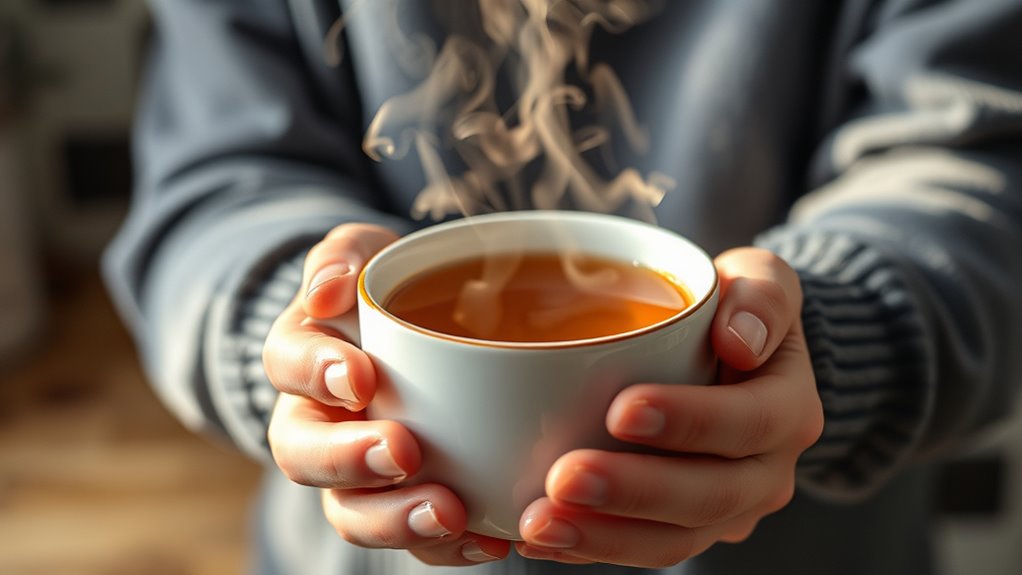
Ever wonder how a warm drink can influence your body’s flow? You’re about to explore how simple sips can impact circulation in practical, evidence-based terms. When you drink something warm, your core temperature can nudge slightly upward, signaling your cardiovascular system to respond. This isn’t magic; it’s your body’s reflex to optimize tissue perfusion. You’ll likely notice a subtle shift toward a more comfortable state, especially if you’re in a cooler environment or after a period of inactivity. The idea is straightforward: warmth can promote more efficient blood movement, particularly through the superficial vessels near your skin, which supports overall circulation without demanding extra energy.
Warmth nudges core temperature, signaling the body to boost peripheral blood flow.
In this context, warming beverages become a simple habit with tangible effects. The act of consuming a warm drink can contribute to a transient increase in blood flow to skin and muscles, a response that may help you feel warmer and more relaxed. You don’t need fancy formulas to gain this benefit—just a beverage you enjoy at a comfortable temperature. Hydration status matters here, because adequate hydration supports blood volume and flow. If you’re mildly dehydrated, you can counter that effect by choosing a warm beverage that you’d drink anyway, rather than reaching for a caffeinated option that could trigger a diuretic effect in some people. Hydration effects, then, aren’t about a one-size-fits-all number; they’re about maintaining steady fluid balance to support vascular tone and performance across daily activities.
Vascular relaxation is a key mechanism you can leverage with warm drinks. When your vessels are relaxed, resistance drops and blood can move more freely. This can translate into modest reductions in perceived exertion during activities and easier recovery after workouts. To make this practical, you might pre-plan a warm beverage after sitting for long periods or before light activity, using it as a cue to shift posture, stand up, or stretch. The exact magnitude of these changes varies among individuals, but the pattern is consistent: warmth promotes a relaxation of the vessels, which can help maintain steady blood flow without requiring extra effort from your heart.
If you’re looking for real-world guidance, aim for beverages that are pleasantly warm, not scalding. Choose options with modest calories and minimal added sugars to avoid spikes in energy and subsequent crashes. Coffee and tea can fit this plan for many people, while herbal infusions offer soothing alternatives that contribute to hydration and warmth. Track how your body responds: note any changes in how you feel after a short period of consistent warm drink intake, and adjust temperature, timing, and type of beverage accordingly. In daily life, consistent, evidence-informed choices about warming beverages can support blood flow, hydration, and vascular relaxation without complicating your routine.
Common Questions
Do Warm Drinks Affect Blood Pressure Significantly?
Yes, warm drinks can affect blood pressure, but the impact is usually modest and temporary. You might see a small, brief rise in systolic pressure after drinking warming beverages, followed by relaxation as you sip. Consider brewing herbal or caffeine-free options if you’re monitoring BP closely. For most people, the effect is mild; maintain overall heart-healthy habits, and discuss persistent changes with your clinician if you’re taking meds or have hypertension.
Can Warm Beverages Replace Exercise for Circulation?
No, warm beverages can’t replace exercise for circulation. They may provide transient comfort and help you stay hydrated, but physical activity promotes vascular health, muscle pumping, and sustained blood flow beyond what sipping does. In our discussion ideas, consider how coverage gaps between beverages and activity affect guidance for different ages or conditions. Use evidence-based tips: pair warm drinks with regular movement, monitor responses, and tailor plans to individual tolerance and fitness.
Which Drinks Best Boost Circulation Quickly?
Warm beverages can help momentarily boost circulation, but they aren’t a substitute for exercise for lasting benefits. For quick circulation, opt for hot beverages like tea with caffeine or herbal variants that you tolerate well; caffeine may give a temporary lift, while warmth widens vessels. You should also stay hydrated and move regularly. Remember, no drink replaces movement for cardiovascular health, so pair hot beverages with quick, active breaks for best, evidence-based results.
Do Cold Climates Negate Warm Drink Benefits?
In cold climates, yes, the cold climate impact can blunt some warmth benefits, but you still gain from warm drinks. About 21% of people show stronger peripheral warming with heat-based beverages, suggesting genetics vs environment plays a role too. You’ll likely notice improved circulation, though effects vary. Use room temperature to hot drinks thoughtfully, pair with movement, and don’t rely on warmth alone to maintain circulation in chilly settings.
Are There Risks for People With Anemia Drinking Warm Beverages?
Yes, there are some anemia risks to consider when you drink warm beverages. While most people can enjoy them safely, if you have iron-deficiency anemia, rely on iron-rich foods and medications rather than warmth to boost circulation. Too-hot drinks can irritate stomach lining or interfere with certain meds. Opt for lukewarm beverages, monitor how you feel, and consult your clinician about any interactions with iron supplements or anemia management.