
Balanced meals help steady your blood pressure by pairing lean proteins, plenty of fruits and vegetables, and whole grains with healthy fats. This approach provides potassium, magnesium, and fiber, which support vascular function and fullness, reducing cravings for salty, ultra-processed foods. When you eat with consistent timing and moderate sodium, your body can regulate pressure more smoothly. It’s a practical pattern that invites you to practice small, lasting changes—and you’ll notice what comes next.
Key Points
- Balanced meals emphasize whole foods rich in potassium, magnesium, and fiber, which support steady blood pressure regulation.
- Fiber from fruits, vegetables, and whole grains helps modestly lower cholesterol and improve glycemic control, aiding vascular health.
- Unhealthy sodium is minimized while flavor comes from herbs, olive oil, and citrus, reducing nocturnal blood pressure spikes.
- Healthy fats from fish, avocados, and nuts support vascular function and help maintain heart-healthy cholesterol levels.
- Consistent meal patterns with protein and fiber promote satiety, preventing energy spikes and supporting stable blood pressure over time.
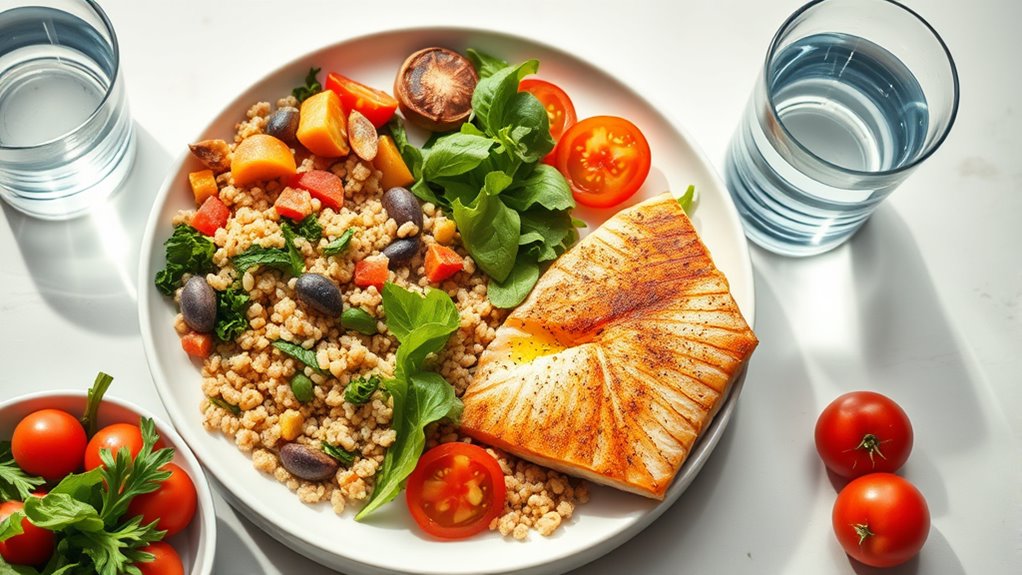
A balanced meals approach supports healthy blood pressure by emphasizing whole, minimally processed foods, lean proteins, and plenty of fruits, vegetables, and whole grains. You’ll see how this pattern helps you manage blood pressure by supplying nutrients that support vascular function, reduce excess sodium impact, and promote steady energy. In practical terms, a balanced meals plan prioritizes variety within each meal and across the day, pairing nutrient-dense choices with portions that support your overall energy needs. You’ll rely on fruits and vegetables for potassium, magnesium, and fiber, which contribute to rhythm in your blood vessels and improved satiety, helping you avoid overeating or snacking on less-healthy options.
When you choose meals, you’ll aim to minimize ultra-processed foods that often carry excess sodium, added sugars, and unhealthy fats. Balanced meals emphasize whole grains like oats, quinoa, and brown rice, plus legumes, nuts, seeds, and lean proteins such as fish, poultry, or plant-based alternatives. You’ll recognize that lean proteins contribute to muscle maintenance without overwhelming your daily saturated fat budget, supporting cardiovascular health over time. You’ll also incorporate dairy or fortified alternatives in moderate amounts to provide calcium and additional potassium, supporting steady pressure regulation.
Choose whole grains, legumes, lean proteins, and dairy in moderation to support steady blood pressure.
You’ll appreciate the role of fiber in balanced meals. Dietary fiber, particularly soluble fiber, can modestly lower cholesterol and improve glycemic control, which indirectly supports blood pressure stability. You’ll structure meals so that vegetables and whole grains form the foundation, with protein and healthy fats complementing them. This approach promotes satiety, reduces fluctuations in energy that can trigger stress responses, and helps you sustain a consistent eating rhythm throughout the day. You’ll monitor portion sizes and adapt them to your activity level, avoiding large, high-sodium dinners that may disrupt nocturnal blood pressure patterns.
In practice, your daily pattern might include a vegetable-heavy breakfast, a fiber-rich lunch with beans or lentils, and a lean-protein dinner with whole grains and leafy greens. You’ll flavor foods with herbs, spices, olive oil, and citrus rather than heavy sauces laden with sodium and additives. You’ll read labels to identify products with lower sodium content and minimal processing. You’ll learn to balance fats by prioritizing unsaturated fats from fish, avocados, and nuts, while limiting saturated fats and trans fats, which can contribute to vascular stiffness when consumed in excess.
Evidence supports that balanced meals improve blood pressure control by providing a consistent intake of minerals, fiber, and heart-healthy fats, while reducing high-sodium exposure and energy spikes. You’ll notice gradual, incremental improvements in blood pressure readings as you maintain a steady pattern. The approach is practical, scalable, and adaptable across different dietary preferences, making it easier to sustain long term. By committing to balanced meals, you’re choosing a reliable, preventive strategy that supports healthy blood pressure through nutrient-dense choices, mindful portions, and consistent eating patterns.
Common Questions
How Do I Measure Portion Sizes for Balance?
To measure portion sizes for balance, start with plate dimensions: a standard plate is roughly 9 inches across, giving clear visual cues. Use a palm-sized portion of lean protein, a fist-sized portion of vegetables, and a cupped hand of carbohydrates. For fats, limit to a thumb. Track total calories if you need precision. Practice by filling your plate in meals, adjusting portions until you consistently match these visual targets.
Do Supplements Replace a Balanced Meal for BP?
No, supplements don’t replace a balanced meal for blood pressure. You should aim for balanced meals to maintain dietary adequacy and stable blood pressure. Supplements may help only if you’re deficient or as advised, but the supplements controversy means they can’t substitute for real foods that provide fiber, potassium, and magnesium. Rely on whole foods first, and consult a clinician about any targeted benefits or risks before relying on supplements for blood pressure management.
Can Eating Late at Night Affect Blood Pressure?
Late night eating can raise blood pressure modestly for some, due to late meals, salt, caffeine, or alcohol, and the body’s nocturnal blood pressure pattern. You may see higher numbers the next morning, especially if you overeat or skip sleep. The blood pressure impact tends to be temporary, but repeated late meals can stress vessels. You should aim for regular, balanced dinners and avoid late snacks if you’re sensitive to sleep disruption.
Is Vegetarian or Vegan Better for BP Control?
Yes, vegetarian or vegan can help, but neither is inherently superior for BP control. You’ll likely benefit from vegetarian benefits like higher fiber and lower saturated fat, yet vegan drawbacks such as potential iron or B12 gaps if not planned. If you choose vegan, monitor micronutrients and maintain protein. For both, emphasize fruits, vegetables, whole grains, and legumes, limit sodium, and balance potassium. Personal responses vary—consult your clinician for tailored guidance.
How Quickly Can BP Improve With Dietary Changes?
Within weeks, you can see some BP improvements, but true changes unfold over months. A notable stat: dietary shifts can reduce systolic BP by about 5–11 mm Hg in 6 months for many people. You’ll likely experience quick pace improvement early, then long term changes solidify as you maintain balanced meals. Stay consistent with veggies, low-sodium options, and potassium-rich foods; combine with weight management and activity for durable benefits.