
You might not realize potassium helps relax your blood vessels, lowering resistance. It offsets sodium’s pressor effects and supports fluid balance, which can ease hypertension in the short term and over the long term through kidney handling of sodium and water. As you increase potassium, your heart and vessels respond with steadier pressure, especially if you tend to high-sodium diets or already have high blood pressure. This connection is worth exploring further.
Key Points
- Potassium relaxes vascular smooth muscle, aiding immediate dilation and reducing vascular resistance.
- It offsets sodium’s pressor effects, helping lower net blood pressure, especially with high sodium intake.
- Kidney handling of potassium influences sodium and water balance, affecting extracellular fluid and BP.
- Long-term potassium regulation involves hormonal pathways (renin-angiotensin-aldosterone), supporting volume control.
- Dietary potassium from foods, not supplements, offers consistent BP benefits with individual variability and safety considerations.
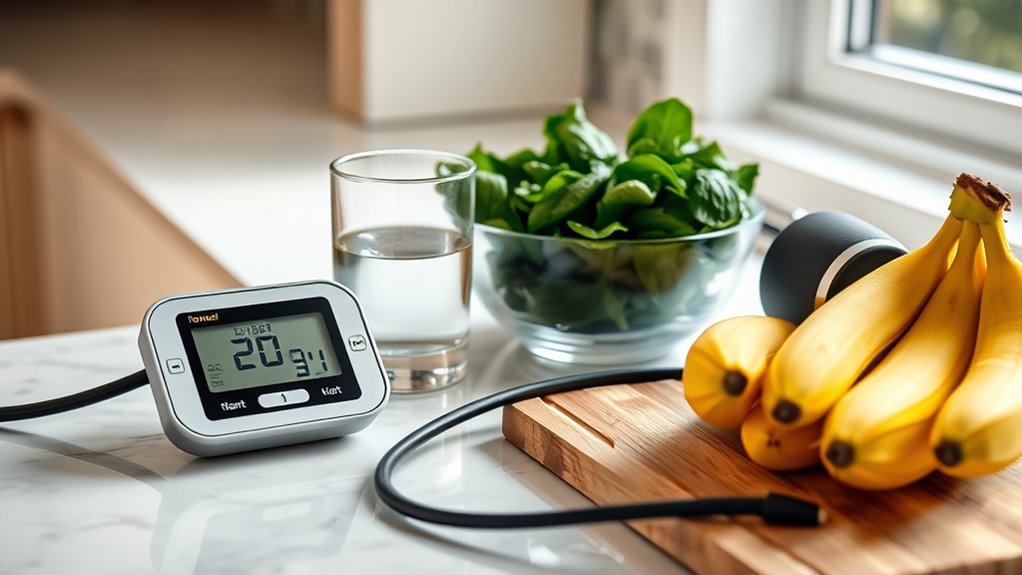
Potassium plays a key role in blood pressure regulation, helping to relax blood vessel walls and balance the effects of sodium in the body. You’ll see that potassium contributes to the short-term ability of your arteries to dilate, while also supporting longer-term changes in fluid balance and vascular responsiveness. In this context, the term potassium mechanisms captures how cellular transport, membrane potential, and hormonal signaling cooperate to influence vascular tone. You’re not just consuming a mineral; you’re engaging a regulator of electrical activity in smooth muscle and a player in kidney function that shapes extracellular fluid volume.
Potassium regulates vascular tone, balancing sodium and guiding short-term dilation and long-term fluid balance.
When you consider blood pressure regulation, the most direct impact comes from how potassium interacts with sodium. Higher dietary potassium tends to offset the pressor effects of sodium, reducing net vascular resistance. This interaction involves a range of channels and pumps, including Na+/K+-ATPase, which maintains cellular ion gradients, and various potassium channels that modulate hyperpolarization and relaxation in vascular smooth muscle. Through these potassium mechanisms, your vessels are more likely to stay or return to a relaxed state after a constrictive signal. The net effect is a modest but meaningful reduction in systolic and diastolic pressures, particularly in individuals with high sodium intake or elevated baseline blood pressure.
You’ll find that the kidney is central to this regulation. Potassium prompts changes in renal handling of sodium and water, altering extracellular fluid volume, which, in turn, supports stable blood pressure. In practical terms, this means potassium helps you maintain a balanced fluid status, preventing excess volume that could raise pressure. Moreover, renal potassium sensing and hormonal pathways, including the renin-angiotensin-aldosterone system, adapt to your intake levels, influencing long-term blood pressure regulation. This dual action—immediate vascular relaxation and longer-term volume control—underpins the protective association seen in population studies between higher potassium intake and lower blood pressure.
Evidence from controlled trials and meta-analyses supports a modest, consistent effect of potassium on blood pressure regulation, particularly among people with hypertension or high sodium consumption. You should aim to meet recommended intake levels through dietary sources whenever possible, while recognizing individual variability and medical context. If you have impaired kidney function or medication that affects potassium handling, you’ll need to tailor intake under professional guidance. Supplements can alter potassium mechanisms in unpredictable ways and may pose risks in certain conditions.
Common Questions
How Much Potassium Should a Typical Adult Consume Daily?
A typical adult should aim for about 3,500 milligrams of potassium daily. You’ll hit this target by including potassium sources like bananas, potatoes, beans, yogurt, and leafy greens in your daily intake. Your exact needs can vary based on age, sex, activity, and health conditions, so check with your clinician if you have kidney issues or take certain medications. Balance matters, so spread your potassium across meals for steady, evidence-based support.
Can Potassium Cause Dangerous Heart Rhythm Problems?
Potassium can cause dangerous heart rhythm problems, but only in rare cases or when you take it in excess, or have kidney issues. You won’t create a “potassium rhythm” catastrophe if you stay within recommended amounts and follow your clinician’s guidance. The timing matters: dangerous timing occurs when levels spike quickly due to overdose or drugs. Monitor labs, avoid supplements without advice, and report palpitations or dizziness immediately. Stay evidence-based, precise, and cautious.
Do Supplements Work Better Than Food Sources for Blood Pressure?
You’ll likely get better, steadier results from potassium dietary sources rather than pills alone. Foods provide a balanced mix of potassium with fiber, minerals, and other benefits that support blood pressure. Supplements can help if you’re deficient or can’t meet needs, but their efficacy varies and overuse raises risk. In general, focus on a varied, potassium-rich diet; use supplements only under healthcare guidance when dietary intake isn’t enough. Potassium dietary remains most reliable for BP.
Are There People Who Should Avoid High-Potassium Diets?
Yes, some people should avoid high-potassium diets. Specifically, you may need medical supervision if you have kidney disease, advanced heart failure, or certain medications that raise potassium levels. You should follow your clinician’s guidance because of people restrictions that apply to your case. Regular labs and monitoring are common, and you’ll adjust intake accordingly. If you notice fatigue, weakness, or numbness, seek care promptly.
Does Potassium Interact With Common Blood Pressure Medications?
potassium can interact with certain blood pressure meds. You should expect possible potassium drug interactions with ACE inhibitors, ARBs, and potassium-sparing diuretics, which might raise your potassium levels. Always follow medication compatible potassium guidelines and consult your clinician before adjusting intake. Monitor symptoms like weakness or heart rhythm changes. Your plan should include regular labs to guide safe use, and never mix supplements with prescription meds without medical approval.