
When you choose matcha, you’re not just sipping tea—you’re stocking up on EGCG-rich catechins, calming L-theanine, and robust antioxidant protection. You’ll feel the balance of energized focus and steadier mood, plus long-term support for wellness. But not all blends offer the same potency or freshness. Curious how to spot the right option and maximize antioxidants while keeping taste satisfying? Let’s explore the key picks and what to look for.
Key Points
- Prioritize EGCG-rich matcha sourced from ceremonial-grade, first-flush leaves for higher antioxidant potency per serving.
- Choose organic, third-party tested matcha to ensure purity and reliable antioxidant levels.
- Opt for airtight, light-blocking, BPA-free packaging to preserve catechin content (EGCG) and freshness.
- Favor whole-leaf, ground matcha (vs. blended powders) to maximize antioxidant intake per cup.
- Store in opaque, cool, dry conditions and check harvest/best-by dates to maintain peak antioxidant activity.
MATCHA DNA Certified Organic Matcha Green Tea Powder (16 oz TIN CAN)
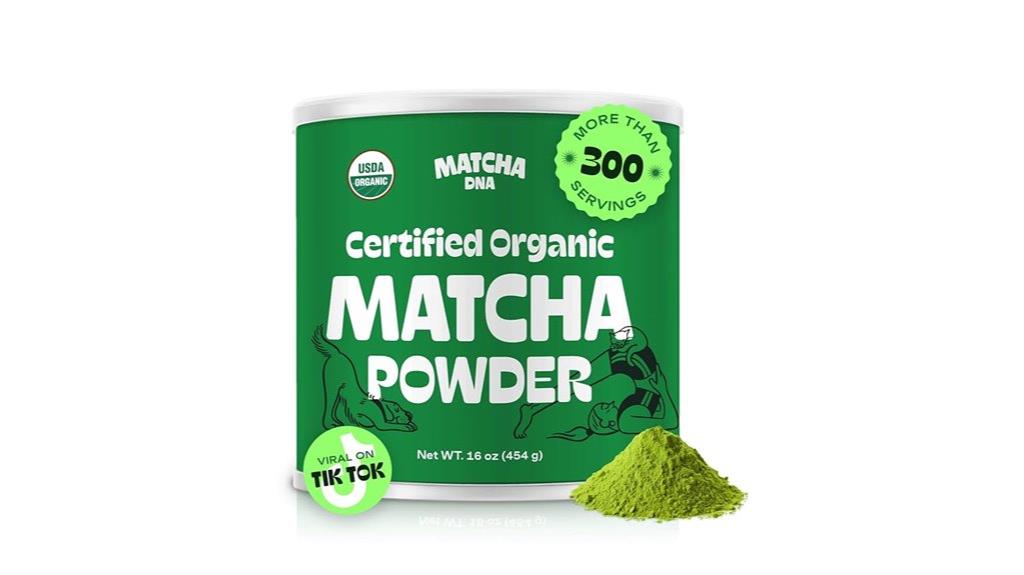
Looking for a reliable,全 organic option with no middlemen? You’ll get MATCHA DNA Certified Organic Matcha Green Tea Powder in a 16 oz tin, a Farm Direct product that saves you money by cutting out middlemen. This USDA Organic-certified tea comes in BPA-free packaging and undergoes third-party lab testing for impurities, ensuring purity. You receive a powder rich in antioxidants, vitamins, minerals, amino acids, and EGCGs, plus L-theanine for calm focus and balanced energy. Use it for tea, lattes, or smoothies, inspired by traditional matcha rituals. You get good quality at a genuine, direct-to-consumer value.
Best For: buyers seeking an organic, direct-to-consumer matcha powder with third-party testing, BPA-free packaging, and versatile use in tea, lattes, or smoothies.
Pros:
- USDA Organic certification and 3rd-party impurity testing ensure purity and compliance
- Direct-to-consumer Farm Direct model offers savings by eliminating middlemen
- BPA-free packaging and rich nutritional profile (antioxidants, EGCGs, L-theanine)
Cons:
- 16 oz tin may be large for new users or occasional buyers
- Powder form requires whisking or blending access for traditional preparation
- Higher upfront price than non-organic or smaller-pack options may apply to some budgets
The Republic of Tea Brain Boost Green Tea Blend (36 Tea Bags)
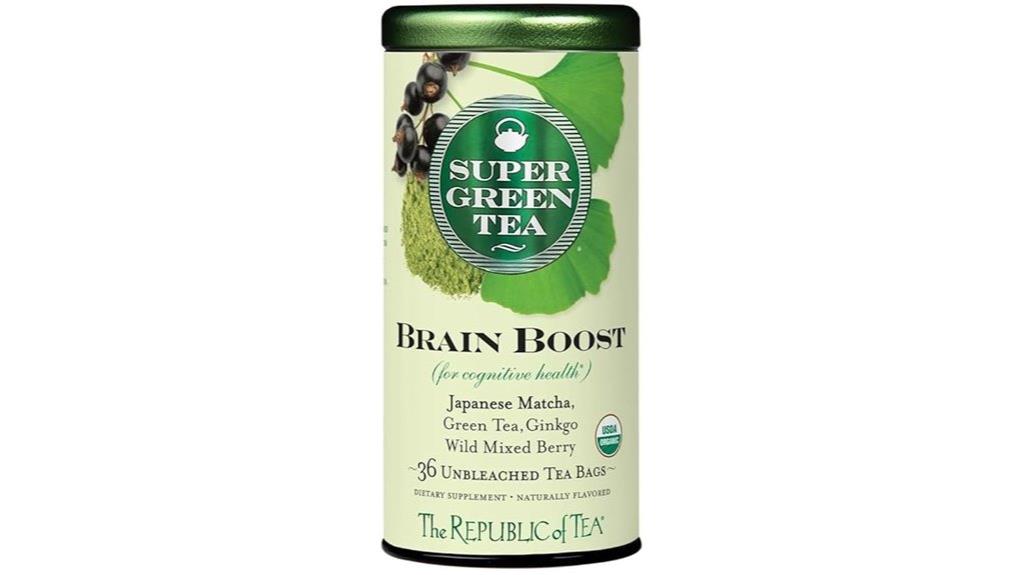
If you’re after a brain-boosting matcha blend with a tasty twist, The Republic of Tea Brain Boost Green Tea Blend stands out for anyone prioritizing cognitive support alongside a berry-forward flavor. You get premium Japanese matcha, green tea leaves, and ginkgo biloba in a 36-tea-bag format. The mix includes organic green tea, organic ginkgo, and matcha, with natural black currant and honey flavors for a smooth, sweet berry note. Expect a crisp, refreshing infusion that supports potential memory benefits by boosting brain connections. Note it contains tree nuts, so check labels if needed.
Best For: Busy professionals seeking a berry-flavored cognitive-support tea with matcha and ginkgo, who want a convenient 36-tea-bag option.
Pros:
- Contains premium Japanese matcha, green tea, and ginkgo biloba for potential cognitive support
- Flexible berry-forward flavor from black currant and honey flavors
- Convenient 36-tea-bag format for regular use
Cons:
- Contains tree nuts; check labeling if you have sensitivities
- Flavor may be too sweet or strong for some preferring plain green tea
- May not be suitable for those avoiding caffeine or green tea components
Pukka Supreme Matcha Green Organic Herbal Tea (Caffeine Free, 80 Total Tea Bags, 4 Pack)
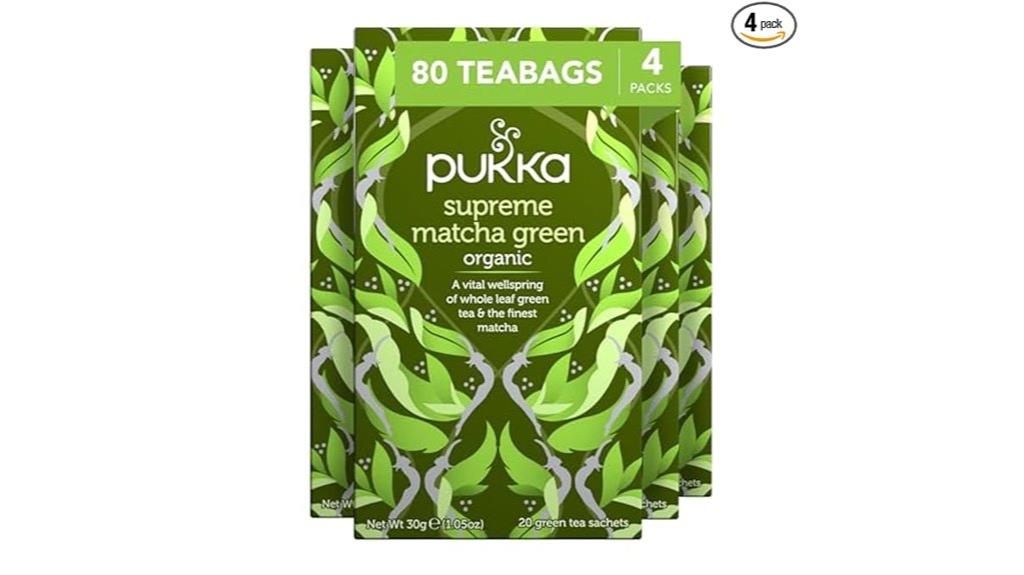
Pukka Supreme Matcha Green Organic Herbal Tea stands out for those seeking a caffeine-free way to enjoy daily vitality with high-quality matcha. You get 80 tea bags across four packs, each containing organic whole leaf green tea, finest matcha powder, and an organic herbal blend. This decaffeinated infusion delivers daily vitality without caffeine, making it ideal for anytime use. Brewing is simple: bring water to a boil and steep 2–15 minutes for a soothing hot tea. Trust a brand rooted in authenticity; Pukka stands for real, genuine flavors and high-quality organic herbal ingredients you can rely on.
Best For: Those seeking a caffeine-free daily vitality infusion with high-quality matcha and organic ingredients.
Pros:
- Caffeine-free option for anytime consumption
- Includes high-quality matcha powder and organic green tea
- Comes in a 4-pack with 80 tea bags for long-term use
Cons:
- Decaffeination may alter flavor for some matcha purists
- Steeping time range (2–15 minutes) could be inconsistent for optimal taste
- May be pricier than non-organic, non-matcha alternatives
Factors to Consider When Choosing Matcha Green Tea Antioxidant
When you choose a matcha antioxidant, start by checking the antioxidant profile and how it’s measured, so you know what you’re getting. Look for organic certifications, trusted sourcing of tea leaves, and clear notes on processing that affect potency. Consider freshness, packaging quality, and how the product protects the tea from light and air to keep maximum potency.
Antioxidant Profile Basics
Ever wondered what makes matcha’s antioxidants stand out? You’ll want to look at the antioxidant profile basics. Matcha is rich in catechins, especially EGCG, the most abundant active compound. Because you consume the whole leaf, the antioxidant content per cup is often higher than traditional brewed green tea. L-theanine works with catechins to provide balanced energy and may support oxidation reduction in your body. Organic and high-quality sourcing can influence antioxidant levels, since farming practices affect plant stress and polyphenol production. Third-party testing and certification, like USDA Organic, help verify product purity and antioxidant integrity. When selecting, prioritize fresh, properly stored matcha with clear sourcing and certification to maximize your antioxidant benefits.
Organic Certification Standards
Organic certification standards guide you to safer, purer matcha by ensuring farming avoids synthetic inputs and maintains soil health. You’ll see USDA Organic rules requiring annual inspections and adherence to the National Organic Program, which helps verify integrity from farm to cup. Organic matcha must come from leaves grown without prohibited chemicals and processed without synthetic additives, preserving its organic status. Third-party testing for impurities—like heavy metals and pesticides—is common, giving you independent safety verification. Packaging often highlights BPA-free materials, aligning with purity goals and consumer trust. When you evaluate brands, look for clear organic claims backed by third-party certifications and transparent testing results. This standard isn’t just branding; it’s a measurable commitment to safer, cleaner antioxidants in your routine.
Source of Tea Leaves
Source leaves matter most when you’re evaluating matcha’s antioxidant punch. Shade-grown Camellia sinensis boosts chlorophyll and amino acids, elevating antioxidant content you’ll notice in the cup. For ceremonial-grade matcha, harvest from the first flush often yields richer catechin and EGCG levels, enhancing potency you’re after. Organic farming on the source farms reduces pesticide residues, supporting a cleaner antioxidant profile in the powder you use daily. When possible, opt for farm-direct or single-origin sourcing, which can offer more consistent antioxidant levels than mixed origins. Freshly milled leaves from the source deliver higher antioxidant activity than older stock or reprocessed powders, so seek suppliers that mill to order and ship promptly for peak potency.
Processing Impact On Potency
Processing methods shape matcha’s antioxidant punch: grinding, oxidation, and drying can shift catechin and EGCG levels, and aggressive heat or long exposure often lowers potency. You’ll notice that less processing preserves potency; minimally processed matcha tends to retain higher catechin and L-theanine levels than highly processed powders or burnt, scorched leaves. Temperature during extraction matters too: hotter water can release antioxidants faster but may degrade heat‑sensitive compounds, altering overall potency. Storage after processing matters as well—exposure to light, air, and moisture accelerates antioxidant degradation, so choose opaque, airtight containers. Freshness counts: matcha milled recently and with short post‑harvest timelines generally offers higher antioxidant activity than older powders. In short, prioritize gentle processing, mindful extraction, and proper storage to maximize potency.
Freshness and Packaging Quality
Freshness and packaging quality directly affect how well matcha retains its antioxidants. You want packaging that blocks light, air, and moisture to preserve antioxidant levels, especially catechins like EGCG. Choose BPA-free options to reduce potential chemical exposure that could impact safety and quality. Opt for airtight, resealable tins or sealed pouches to minimize oxidation and keep EGCG stable. Look for packaging that clearly states harvest date or best-by date to gauge freshness and potency. Vacuum-sealed or nitrogen-flushed designs can further extend shelf life, preserving antioxidant integrity over time. Regularly check seals and avoid damaged or stressed packaging. When you prioritize these details, you’ll maintain higher antioxidant content from bag to cup.