
Hydration helps smooth blood pressure by keeping your plasma volume steady, supporting steady stroke volume, and reducing reflexive sympathetic spikes after meals, heat, or exercise. When you’re well-hydrated, blood viscosity stays favorable and endothelium functions optimally, buffering vasoconstriction. Consistent fluids, with balanced electrolytes, can dampen morning surges and day-to-day fluctuations. Stay curious about how small hydration habits might influence your numbers, because the story isn’t just about fluids—it’s about keeping pressure stable across your day.
Key Points
- Proper hydration supports stable plasma volume, preserving stroke volume and preventing sudden blood pressure swings.
- Adequate fluids reduce sympathetic activation and vasoconstriction linked to dehydration, helping maintain lower resting pressures.
- Hydration keeps blood viscosity and endothelial function stable, mitigating sharp BP spikes after meals or heat exposure.
- Consistent fluid intake blunts exaggerated BP responses to stressors like exercise and daily activity.
- Simple hydration monitoring (urine color, weight) guides steady intake, supporting consistent vascular regulation and BP stability.
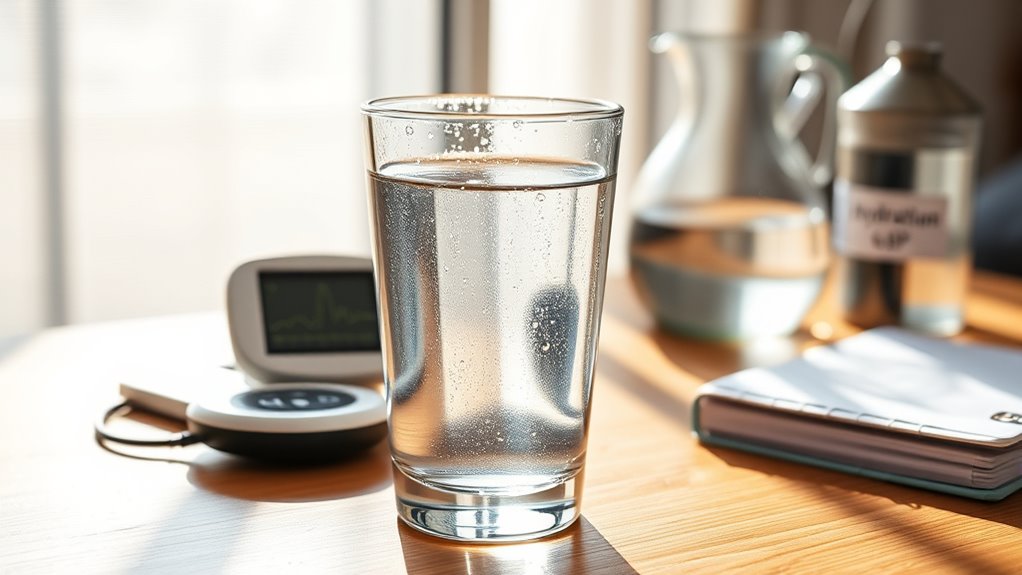
Hydration and Blood Pressure: how much you drink can influence your blood pressure readings and overall cardiovascular health. You’ll approach this topic with precision, focusing on how fluid balance affects vascular function and how your intake can prevent spikes. When you assess hydration physiology, you’ll see that water influences plasma volume, blood viscosity, and endothelial behavior. Adequate hydration helps maintain an ideal plasma volume, which supports stable stroke volume and reduces sympathetic activation that could elevate blood pressure. Inadequate intake, even in healthy individuals, can trigger compensatory mechanisms—renin-angiotensin-aldosterone system activation, vasopressin release, and shifts in electrolyte balance—that predispose you to transient rises in systolic pressure, especially with activity or heat exposure.
Hydration stabilizes plasma volume, lowers risky blood pressure spikes, and supports vascular balance.
You’ll recognize that staying hydrated isn’t a single fix but part of a broader approach to blood pressure regulation. If you’re chronically underhydrated, you may experience higher resting pressures or exaggerated responses to stressors like exercise or sodium intake. Conversely, maintaining appropriate hydration helps preserve consistent plasma osmolality, supports microvascular flow, and mitigates excessive vasoconstriction driven by dehydration-associated hormonal cues. Evidence suggests that steady hydration supports more stable morning readings and can blunt acute spikes after high-sodium meals or heat waves, particularly when combined with other healthy behaviors. Your goal is to align fluid intake with body demands, which vary by temperature, activity, age, and medical status.
In practical terms, you’ll monitor hydration physiology by observing urine color, frequency, and volume as a simple proxy for hydration status, paired with daily weight if you’re tracking fluid balance closely. You’ll aim for regular fluid intake throughout the day rather than large, infrequent amounts. While ideal volume differs per person, a common baseline is about 2 to 3 liters per day for many adults, adjusted for climate and activity. You’ll prefer water as your primary source, while recognizing that beverages with electrolytes or modest caffeine content can contribute meaningfully to intake without destabilizing regulation. If you engage in intense exercise or hot environments, you’ll increase intake accordingly to compensate for sweat losses, supporting both hydration physiology and blood pressure regulation through stable plasma volume and reduced relative hemoconcentration.
You’ll also consider how hydration interacts with other factors affecting blood pressure regulation, such as salt balance, potassium intake, and overall cardiovascular fitness. By prioritizing consistent hydration, you help attenuate pressure variability across daily activities, meals, and rest. In sum, thoughtful hydration supports stable vascular function, maintains plasma volume, and minimizes dehydration-driven vasoconstriction, contributing to lower risk of blood pressure spikes. You’ll benefit from integrating hydration awareness into a broader, evidence-based strategy for cardiovascular health.
Common Questions
Can Hydration Tips Differ for Athletes vs. Non-Athletes?
Yes, hydration tips can differ for athletes and non-athletes. You should adjust hydration timing to match activity, sweat rates, and environmental heat. For athletes, prioritize pre- and post-exercise fluids and electrolyte balance to sustain performance and recovery. You, as a non-athlete, focus on consistent daily intake and mindful hydration around workouts. Always monitor urine color and thirst, and tailor hydration timing and electrolyte balance to your activity level, climate, and health needs.
Do Flavored Drinks Negate Hydration Benefits for Blood Pressure?
Flavored drinks don’t magically erase hydration benefits. They often add sugars or sodium that can blunt hydration impact and may raise blood pressure if consumed in excess. You’ll still get water’s benefits, but watch for added calories and caffeine. For best hydration impact, favor water or unsweetened options, monitor total intake, and limit high-sodium or sugary flavored beverages. If vascular risk is a concern, prefer evidence-based limits and consult a clinician.
How Does Altitude Affect Hydration-Blood Pressure Relationship?
Altitude affects hydration–bloodpressure regulation: at higher altitudes you may lose more fluids through respiration and diuresis, risking dehydration that can raise blood pressure. You’ll want to monitor hydration status closely, sip water regularly, and consider electrolytes to maintain plasma volume. You might see blunted thirst signals, so preemptive intake matters. In short, altitude shifts hydration needs, and staying well-hydrated supports steadier blood pressure and regulation.
Can Hydration Influence Medication Effectiveness for Hypertension?
Hydration can influence how well hypertension meds work, though it’s not a magic fix. You may alter absorption and blood levels of certain drugs, so you should stay consistent with fluids and consult your clinician. Hydration and meds matter, and electrolyte balance plays a role in how your body handles these medications. Don’t guess—monitor symptoms, report any dehydration, and follow dosing guidance to keep efficacy and safety aligned.
Are There Signs of Overhydration to Watch For?
Yes. Signs of overhydration can occur if you drink too much water for your body’s needs, leading to hyponatremia. Watch for symptoms warning such as confusion, headaches, nausea, vomiting, and swelling in hands, feet, or around the ankles. You might also feel bloated or have low blood sodium. If you notice these signs, especially with rapid water intake or diuretic use, seek medical advice promptly to prevent complications.